Biography of George Washington Carver
George Washington Carver is widely known for more than just peanuts. This biography will break down how he became one of the most influential figures in American history. Known for his groundbreaking research and innovations in agriculture, Carver’s work transcended science, leaving a legacy of empowerment and sustainability. George Washington Carver’s life story traces an extraordinary journey — from being born into slavery to becoming a pioneering scientist and educator.
His most famous contributions come from his pioneering work with peanuts, sweet potatoes, and crop rotation. While many mistakenly believe he invented peanut butter, the reality is more nuanced. Rather than focusing on a single invention, Carver explored hundreds of new applications for familiar crops, helping reshape Southern agriculture. Some of George Washington Carver’s most notable inventions include: peanut-based cosmetics, dyes, plastics, and sweet potato-derived adhesives. Each of these discoveries reflects his creativity and his lasting impact on modern agriculture.
George Washington Carver’s impact on agriculture lives on through his promotion of crop rotation to revive exhausted soils. This marked the beginning of his advocacy for sustainable farming practices — long before environmentalism became a global movement. His teachings empowered poor farmers to diversify crops, conserve land, and overall, achieve a greater sense of independence.
Carver’s story is also one of resilience. Despite being born into slavery around 1864, he rose through adversity to become a symbol of hope, education, and perseverance. Carver also viewed his scientific work as a form of service, emphasizing education, faith, and community uplift.
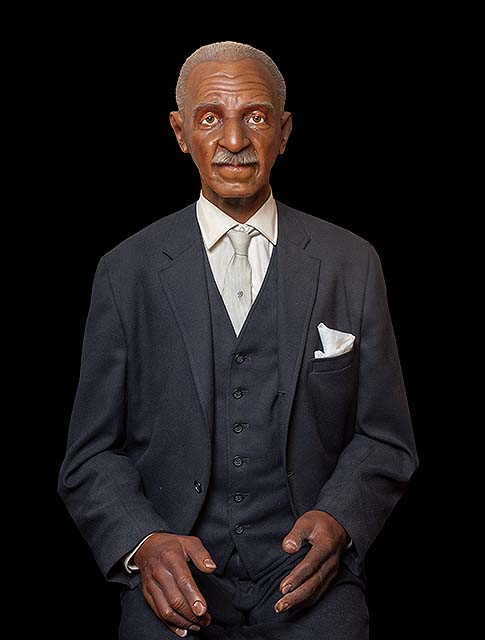
Today, his life and achievements are commemorated worldwide. Exhibits at Potter’s Wax Museum highlight facts about George Washington Carver’s life and preserve his legacy for future generations. George Washington Carver’s biography reveals more than a scientist: it tells the story of a man whose humility and brilliance reshaped the world.
DID YOU KNOW?
Carver's impact on agriculture lives on through his promotion of crop rotation to revive exhausted soils.
Early Life of George Washington Carver
George Washington Carver was born into slavery in Diamond, Missouri, around 1864. His exact birthdate remains uncertain due to the lack of records for enslaved children. His parents, Giles and Mary, were owned by Moses Carver, a German-American immigrant farmer. Shortly after George’s birth, his father died in an accident, and his mother disappeared — likely kidnapped during raids by slave traders.
As a frail and sickly child, George was often excused from heavy farm labor. Instead, he spent his early years exploring the natural world. Fascinated by plants, he earned the nickname “the plant doctor” for his ability to nurse sick plants back to health. His curiosity and natural talent for agriculture became evident even in childhood.
Because of racial segregation, Carver had limited access to formal education early in life. Carver attended segregated schools in Missouri and Kansas, which were miles away from his home. George Washington Carver created his own opportunities for learning and recognized the immense value of education.
Through hard work and dedication, he was eventually accepted to Simpson College in Iowa, where he studied art. He was talented in painting, though his professors encouraged him to pursue agricultural science after recognizing his rare gift. Carver later enrolled at Iowa State Agricultural College (now Iowa State University), becoming the university’s first Black student.
This transition shaped the course of his life. At Iowa State, Carver honed his scientific skills and began the research that would make him one of the most influential agricultural scientists of all time.
Fun Facts About George Washington Carver
1. George Washington Carver developed more than 300 uses for peanuts, from paints to fuel, and more. His innovative work with peanuts remains one of the most recognizable parts of his legacy in American history.
2. He also discovered over 100 products made from sweet potatoes, showcasing his remarkable creativity.
3. Carver became an advisor to U.S. Presidents Theodore Roosevelt and Franklin D. Roosevelt and was even invited to the White House by President Calvin Coolidge.
4. Despite his fame, Carver lived humbly, refusing lucrative offers from corporations to instead serve as a teacher and researcher at Tuskegee Institute.
5. His likeness appears in Potter’s Wax Museum, where his story is highlighted, and his legacy continues to educate visitors.
6. Carver was a deeply spiritual man, crediting his inspiration and discoveries to divine guidance.
7. He was the first African American to have a national monument dedicated in his honor — the George Washington Carver National Monument in Missouri, established in 1943.
Milestones and Accomplishments by George Washington Carver
George Washington Carver was marked by a wide range of impactful accomplishments, including:
Tuskegee Institute: In 1896, Carver accepted an invitation from Booker T. Washington to head the agricultural department at Tuskegee Institute in Alabama. He remained there for nearly five decades, mentoring generations of students.
DID YOU KNOW?
Carver was the head of the agricultural department at Tuskegee Institute in Alabama.
Crop Rotation: One of his most significant contributions to agriculture was teaching farmers the importance of rotating crops. Cotton had depleted Southern soils, but Carver promoted planting peanuts, sweet potatoes, and legumes to restore nutrients.
Inventions and Discoveries: His research led to hundreds of practical products. While George Washington Carver did not patent most of his inventions, he introduced countless ways to improve farming, food, and industry.
Public Recognition: Carver testified before Congress in 1921 to promote tariffs on imported peanuts, becoming a national figure. He later advised Henry Ford on agricultural products that could replace industrial materials.
Educational Outreach: Carver saw science as a tool to uplift the poor. He created mobile classrooms to teach farmers hands-on techniques, ensuring his knowledge reached those who needed it most.
Cultural Legacy: Carver became a symbol of perseverance, rising from enslavement to worldwide recognition. His story is featured at Potter’s Wax Museum, connecting his global importance to local heritage.
Carver’s life’s work changed the way people approached both farming and its environmental impact.
Later in Life
Despite offers of wealth and prestige, Carver lived simply at Tuskegee. He never married, dedicating his life to teaching, research, and faith. Even in old age, he continued experimenting with new products and lecturing across the country.
By the 1930s and 1940s, Carver had become a cultural icon. He met with world leaders, including Mahatma Gandhi, and earned widespread admiration. Yet, he remained humble, often saying he sought not fame but the chance to help others.
On January 5, 1943, Carver died at 78. He was buried at Tuskegee Institute next to Booker T. Washington. His epitaph reads: “He could have added fortune to fame, but caring for neither, he found happiness and honor in being helpful to the world.”
FAQs
What is George Washington Carver best known for?
George Washington Carver is best known for his groundbreaking research in agriculture, particularly crop rotation, and his creative use of peanuts and sweet potatoes. George Washington Carver’s inventions improved farming practices and created hundreds of products.
What is George Washington Carver’s legacy?
Carver’s legacy lies in his contributions to agriculture and his commitment to education. He empowered poor farmers, promoted sustainable practices, and proved that science could uplift communities. His life story continues to inspire resilience and creativity.
Did George Washington Carver invent peanut butter?
No, George Washington Carver did not invent peanut butter. His research on peanuts remains one of the most famous aspects of George Washington Carver’s inventions.
What is George Washington Carver’s famous quote?
One of his most quoted sayings is: “It is not the style of clothes one wears, neither the kind of automobile one drives, nor the amount of money in the bank that counts. These mean nothing. It is simply service that measures success.”