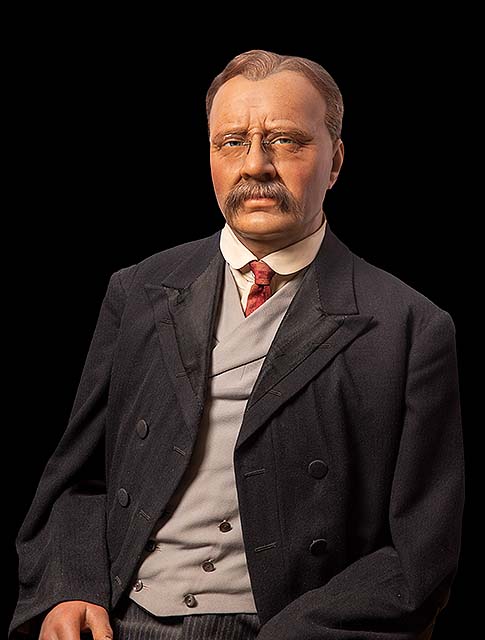
Theodore Roosevelt was the 26th president of the United States and one of the most dynamic and influential leaders in American history. Born on October 27, 1858, in New York City, Roosevelt overcame significant health challenges during his childhood to become a soldier, author, naturalist, politician, and reformer. Known for his energetic personality and commitment to public service, he played a major role in expanding the power of the presidency and shaping the United States during the early twentieth century.
Roosevelt first gained national recognition through his efforts to combat political corruption and promote government reform. He served in several public offices, including New York State Assemblyman, Civil Service Commissioner, Assistant Secretary of the Navy, Governor of New York, Vice President, and eventually President of the United States. Following the assassination of President William McKinley in 1901, Roosevelt became president at the age of 42, making him the youngest person ever to assume the presidency.
As president, Roosevelt became known for his “Square Deal” domestic policies, which focused on consumer protection, corporate regulation, and conservation of natural resources. He aggressively enforced antitrust laws against powerful monopolies and worked to ensure fair competition in business. Roosevelt also established numerous national parks, forests, and wildlife refuges, earning a reputation as one of America’s greatest conservationists.
In foreign affairs, Roosevelt helped negotiate an end to the Russo-Japanese War, earning the Nobel Peace Prize in 1906. He also supported the construction of the Panama Canal, which greatly improved international trade and naval transportation. After leaving office, Roosevelt remained active in politics, exploration, and writing.
Theodore Roosevelt died on January 6, 1919, but his legacy continues to influence American politics, conservation efforts, and leadership. He is remembered as one of the nation’s most energetic presidents and a champion of reform, conservation, and national strength.
Challanges
Roosevelt overcame significant health challenges during his childhood to become a soldier, author, naturalist, politician, and reformer.
Early Life of Theodore Roosevelt
Theodore Roosevelt was born into a wealthy family in New York City on October 27, 1858. As a child, he suffered from severe asthma and frequent illnesses, which made physical activity difficult. Determined to improve his health, Roosevelt followed a rigorous exercise program encouraged by his father. Through hard work and persistence, he gradually became stronger and developed the adventurous spirit that would define much of his life.
Roosevelt was educated at home by private tutors and developed a lifelong passion for reading, science, and nature. He was especially interested in animals and began collecting specimens at a young age. His fascination with the natural world later inspired his conservation efforts as president.
In 1880, Roosevelt graduated from Harvard University, where he studied history, politics, and natural science. Shortly after graduation, he married Alice Hathaway Lee. Tragically, both his wife and his mother died on the same day in 1884. Devastated by the losses, Roosevelt temporarily left politics and moved to the Dakota Territory, where he worked as a rancher and outdoorsman.
Later, Roosevelt married Edith Kermit Carow, a childhood friend, and together they had five children. His experiences overcoming illness, coping with personal tragedy, and exploring the American West helped shape the determination, resilience, and leadership qualities that made him one of the most influential figures in American history.
Interesting Facts About Theodore Roosevelt
Theodore Roosevelt was the youngest person ever to become president, assuming office at age 42.
As a child, he suffered from severe asthma but overcame it through exercise and determination.
Roosevelt won the Nobel Peace Prize in 1906 for helping end the Russo-Japanese War.
He was an avid outdoorsman, hunter, and explorer.
Roosevelt helped establish five national parks and protected millions of acres of public land.
He was known by the nickname “Teddy,” which inspired the creation of the teddy bear.
Roosevelt authored more than 35 books on history, politics, nature, and adventure.
He served as a leader of the Rough Riders during the Spanish-American War.
Roosevelt was the first American to win a Nobel Prize.
He once delivered a political speech after being shot in the chest by an assassin; the bullet did not stop him from speaking.
He explored the Amazon rainforest after leaving the presidency.
Roosevelt boxed, wrestled, and practiced judo as part of his active lifestyle.
He established the United States Forest Service.
Roosevelt greatly expanded the use of executive power during his presidency.
His face is carved on Mount Rushmore alongside George Washington, Thomas Jefferson, and Abraham Lincoln.
Major Milestones and Accomplishments by Theodore Roosevelt
Theodore Roosevelt is best known for serving as the 26th president of the United States and for transforming the role of the presidency. He championed his “Square Deal” program, which focused on consumer protection, controlling large corporations, and conserving natural resources. Roosevelt aggressively enforced antitrust laws, earning the nickname “trust-buster” for breaking up powerful monopolies that threatened fair competition.
One of Roosevelt’s greatest accomplishments was his commitment to conservation. He established five national parks, created numerous national monuments and wildlife refuges, and protected more than 230 million acres of public land. His efforts laid the foundation for modern environmental conservation in the United States.
In foreign affairs, Roosevelt helped negotiate an end to the Russo-Japanese War, becoming the first American to win the Nobel Peace Prize in 1906. He also supported the construction of the Panama Canal, which strengthened global trade and American influence. Through his leadership, reforms, and conservation efforts, Roosevelt became one of the most influential presidents in American history.
Late In Life
After leaving the presidency in 1909, Theodore Roosevelt remained active in public life. He embarked on a major African safari, collecting specimens for the Smithsonian Institution and the American Museum of Natural History. Upon returning to the United States, he reentered politics and ran for president in 1912 as the candidate of the Progressive Party, often called the “Bull Moose Party.”
Although he did not win the election, Roosevelt continued writing books, giving speeches, and advocating for political reform. In 1913, he participated in an expedition to explore an uncharted river in the Amazon rainforest, an experience that seriously damaged his health. Despite growing health problems, he remained involved in national affairs and public debate.
Theodore Roosevelt died in his sleep on January 6, 1919, at his home in Oyster Bay, New York, at the age of 60. He left behind a legacy of leadership, conservation, and reform that continues to influence the United States today.
Trust-Buster
Roosevelt aggressively enforced antitrust laws, earning the nickname "trust-buster" for breaking up powerful monopolies that threatened fair competition.
FAQs
What is Theodore Roosevelt best known for?
Theodore Roosevelt is best known for serving as the 26th president of the United States, promoting conservation, and expanding the power of the federal government. He protected millions of acres of public land, fought monopolies through antitrust actions, and won the Nobel Peace Prize for helping negotiate an end to the Russo-Japanese War.
How did Theodore Roosevelt die?
Theodore Roosevelt died on January 6, 1919, at his home in Oyster Bay, New York. He passed away in his sleep from complications related to a blood clot and other health issues that had worsened over time. Roosevelt was 60 years old and remained active in public life until shortly before his death.
What are Theodore Roosevelt’s “three C’s?”
Theodore Roosevelt’s “three C’s” referred to his Square Deal policies: control of corporations, consumer protection, and conservation of natural resources. These principles guided many of his domestic reforms and reflected his belief that government should protect both the public and the nation’s natural resources from abuse and exploitation.
What was Theodore Roosevelt’s greatest achievement as President?
Many historians consider Roosevelt’s conservation efforts to be his greatest achievement. He created national parks, wildlife refuges, and national forests while protecting more than 230 million acres of public land. His actions established the foundation for the modern conservation movement and permanently changed how America manages its natural resources.
What was Theodore Roosevelt’s involvement with the Rough Riders?
Theodore Roosevelt served as lieutenant colonel and later colonel of the Rough Riders, a volunteer cavalry regiment during the Spanish-American War. He gained national fame for leading the unit during the Battle of San Juan Hill in Cuba in 1898. His wartime leadership helped launch his rise to national political prominence.