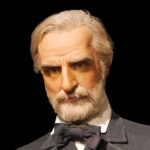
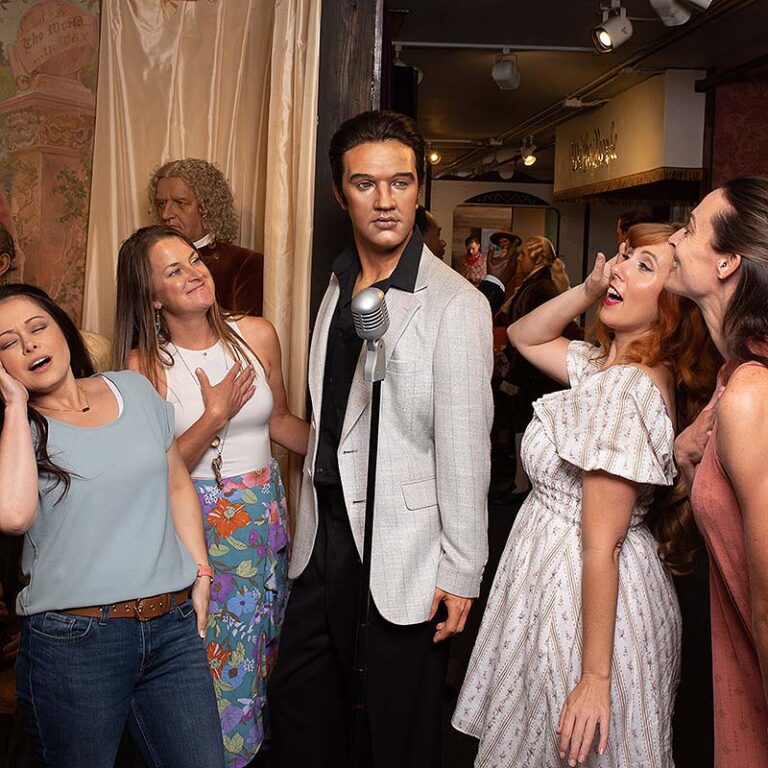
Exploring the life of Elvis Presley at Potter’s Wax Museum offers music fans and history enthusiasts an engaging look at the “King of Rock ‘n’ Roll.” Located in historic downtown St. Augustine, America’s oldest wax museum features an authentically detailed figure of Elvis alongside curated cultural history displays. Visiting Potter’s Wax Museum allows guests to stand face-to-face with the legendary performer while learning how his ground-breaking fusion of country, gospel, and rhythm and blues permanently transformed modern American music and entertainment.
Why Choose Potter’s Wax Museum?
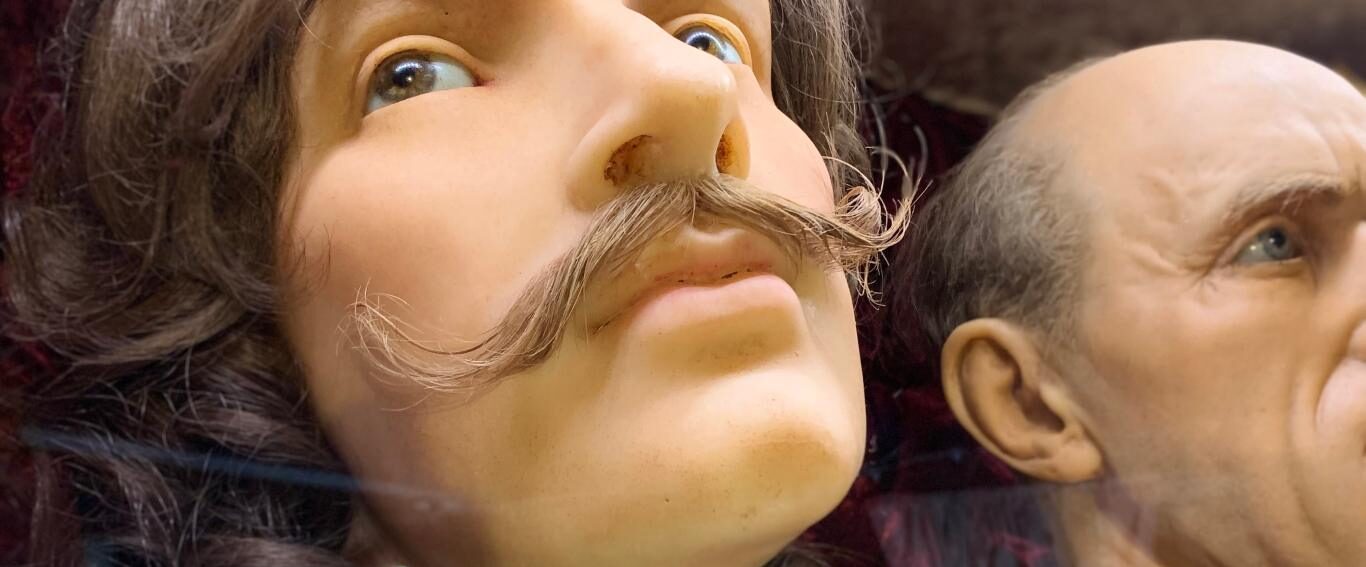
- Lifelike Craftsmanship: Stand inches away from meticulously detailed, life-sized wax figures created with real human hair and custom-sculpted features.
- Rich Cultural History: Discover the stories behind world leaders, historical figures, famous athletes, and legendary pop culture icons.
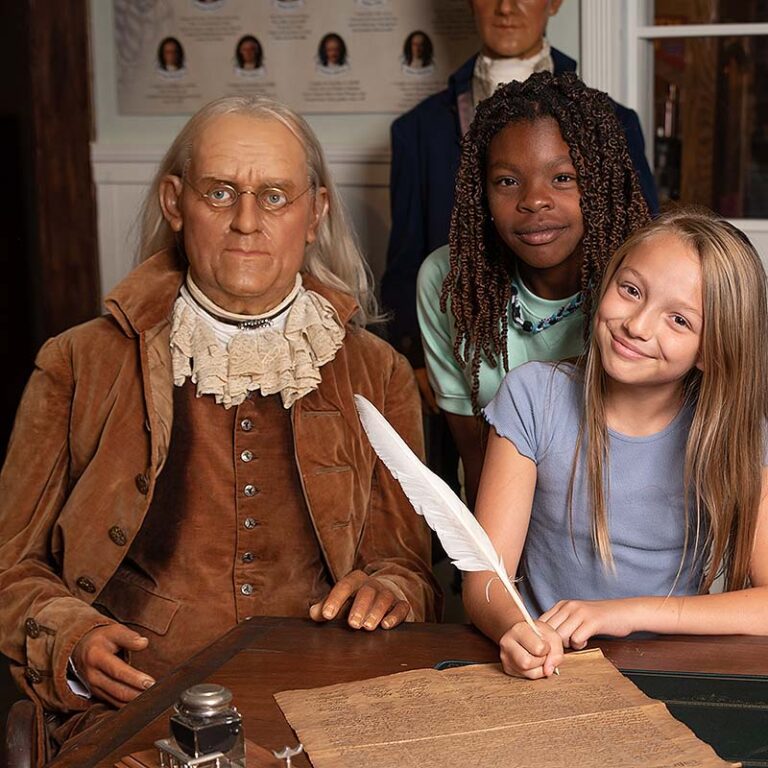
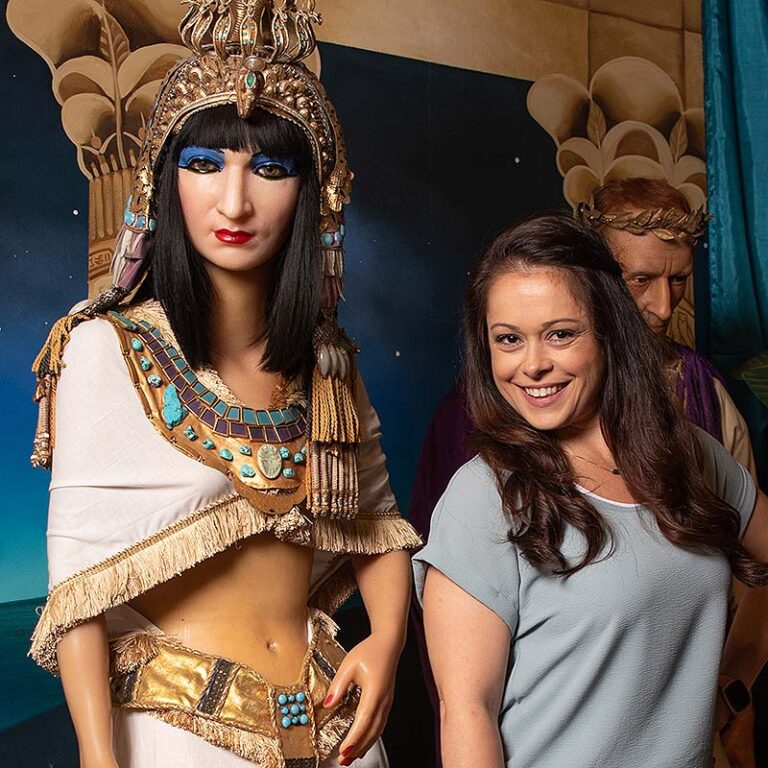
- Interactive Photo Opportunities: Capture memorable photos with music legends and Hollywood celebrities inside historic museum galleries.
- Family-Friendly Environment: Enjoy an entertaining, self-paced indoor experience suitable for visitors of all ages in the heart of the city.
Points of Interest & Elvis Presley Curiosities at Potter’s Wax Museum
- Musical Origins & Influences: Born in Tupelo, Mississippi, and raised in Memphis, Elvis developed his signature vocal style listening to Assembly of God church choirs, country tracks, and Beale Street blues.
- Sun Records & Chart Hits: Learn how his 1954 recording of “That’s All Right” at Sun Records launched his career, leading to iconic hits like “Heartbreak Hotel,” “Hound Dog,” and “Jailhouse Rock.”
- Hollywood Film Career: Discover his transition to cinema starting with Love Me Tender in 1956, leading to a 33-film career with hits like Blue Hawaii and Viva Las Vegas.
- The 1968 NBC Comeback Special: Explore pivotal moments in his career, including his legendary 1968 television performance that re-established his dominance as a live performer.
- Personal Quirks & Stage Style: Uncover surprising personal facts, including his naturally blonde hair, black belt in karate, habit of traveling with his own eating utensils, and penchant for collecting police badges, custom cars, and 1970s stage jumpsuits.
- Graceland & Cultural Legacy: Reflect on his famous Memphis estate and enduring legacy as one of the best-selling solo recording artists of all time.
Biograhpy of Elvis Presley
Elvis Presley is one of the most influential musicians ever. He was born on January 8, 1935, in Tupelo, Mississippi. Presley was known as the “King of Rock ‘n’ Roll.” He blended country, rhythm and blues, gospel, and rockabilly.
Elvis introduced many mainstream audiences to musical styles rooted in African American traditions. He did this at a time when America was divided by race. His television appearances, live concerts, and chart-topping records challenged expectations of what popular music could sound like and how performers could connect with audiences. His signature dance moves, powerful vocals, and confident performances made him one of the biggest stars of the twentieth century.
Elvis became a cultural phenomenon. He starred in successful Hollywood films and built a strong fan base. His songs continue to be played around the world today. His Memphis home, Graceland, remains one of the most visited private residences in America, welcoming hundreds of thousands of fans each year.
Elvis passed away on August 16, 1977, at Graceland in Memphis, Tennessee, at the age of 42. However, musicians across countless genres continue to cite him as an inspiration. More than simply a successful singer, Elvis Presley changed the course of popular music, passing on a remarkable legacy which continues to influence artists and entertainers around the world.
The King
His signature dance moves, powerful vocals, and confident performances made him one of the biggest stars of the twentieth century.
Early Life of Elvis Presley
Elvis was born on January 8, 1935, in Tupelo, Mississippi. His parents were Vernon and Gladys Presley. He was born with an identical twin brother, Jessie Garon Presley, who was stillborn. The loss of his twin deeply affected the Presley family. This tragedy shaped his close relationship with his parents, particularly his mother, Gladys. Throughout his career, Elvis often credited his parents with keeping him grounded.
The Presley family had many financial struggles. Vernon worked a variety of jobs to support the family, and Gladys took on work whenever she could. Although they had little money, Elvis grew up in a loving home where religion and music played central roles. The family regularly attended the Assembly of God church, where gospel music became one of Elvis’s earliest musical influences. Listening to church choirs created a lasting impression on him and helped develop the vocal style that later became one of his trademarks.
In 1948, the Presley family moved to Memphis, Tennessee, hoping for better opportunities. The city exposed Elvis to a much wider range of musical styles than he had experienced in Mississippi. While attending Humes High School, where he graduated in 1953, he listened to country music, pop, gospel, blues, and African American rhythm and blues. Memphis was home to Beale Street, where blues musicians performed regularly, and Elvis admired many of these artists. Rather than limiting himself to one style, he appreciated music from different backgrounds and developed a sound that reflected all of those influences.
Elvis purchased his first guitar as a teenager and practiced for hours on end. He learned songs by listening carefully to recordings and performances instead of taking formal music lessons.
After graduating from high school, Elvis worked several jobs, such as driving a truck. In 1954, he visited Sun Records. Producer Sam Phillips recognized something unique in Elvis’s voice. During a recording session with guitarist Scotty Moore and bassist Bill Black, Elvis performed “That’s All Right.” He created a fresh combination of country and rhythm and blues. The recording turned into a local hit and signified the start of his professional career. Within a short time, Elvis was performing throughout the South, laying the foundation for the extraordinary success that would soon make him one of the most famous entertainers in the world.
Personal Life of Elvis Presley
Elvis Presley valued family and close friendships. His strongest bond was with his mother, Gladys Presley. Her encouragement and unwavering belief in him had a lasting influence on his life. Elvis was deeply affected by her death in 1958. He also maintained a close relationship with his father, Vernon Presley, who later helped manage many aspects of his business affairs. A complete Elvis Presley biography often highlights these family relationships because they played an important role throughout his career.
In 1967, Elvis married Priscilla Beaulieu in a private ceremony at the Aladdin Hotel in Las Vegas. They had their only child, Lisa Marie Presley. Although the demands of his career often kept him on the road, he treasured spending time with his daughter whenever possible. Elvis and Priscilla divorced in 1973 but remained on good terms and continued to raise Lisa Marie together.
Save up
to 5%
Potter’s Wax Museum Tickets
to 5%
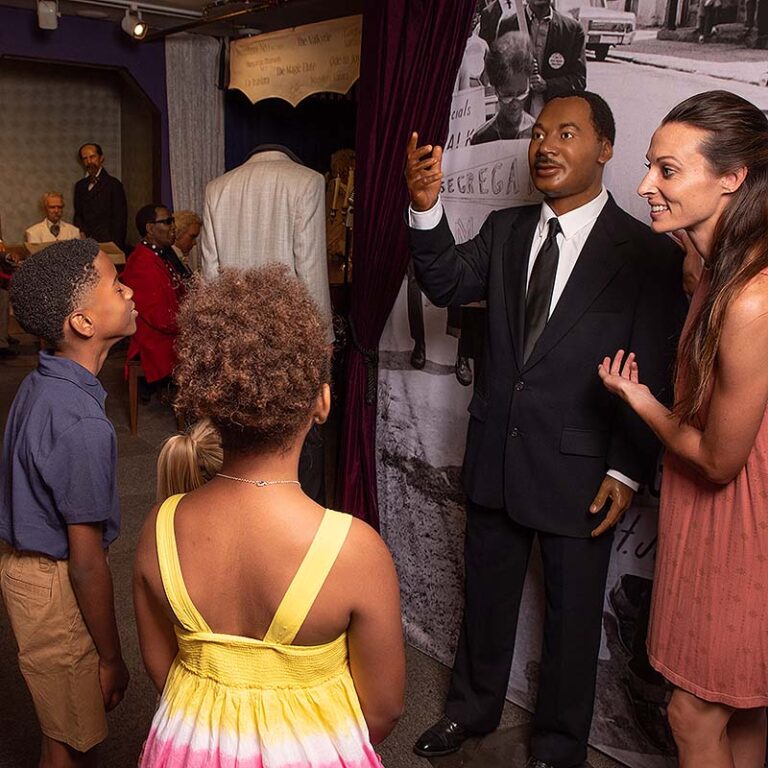
Potter’s Wax Museum is a fun, family-friendly attraction that offers a surreal experience with famous Hollywood stars, professional athletes, and political figures.
- Potter’s Wax Museum is home to more than 160 different wax figures
- The museum’s collection includes people who’ve played an important part in history
- Potter’s Wax Museum offers an entertaining time for adults and children of all ages

Save up
to 6%
to 6%
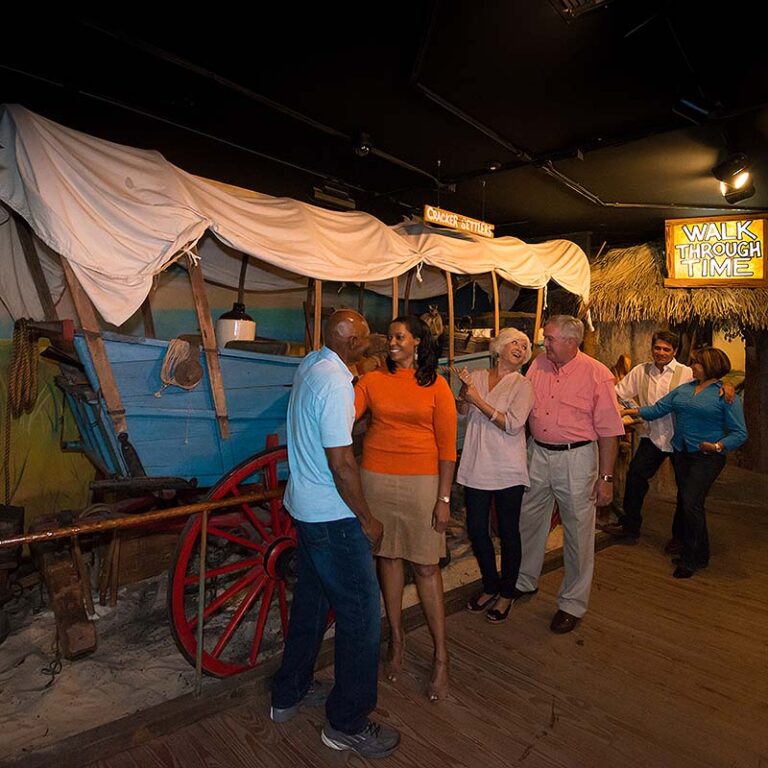
Gain New Insight into Florida’s Past
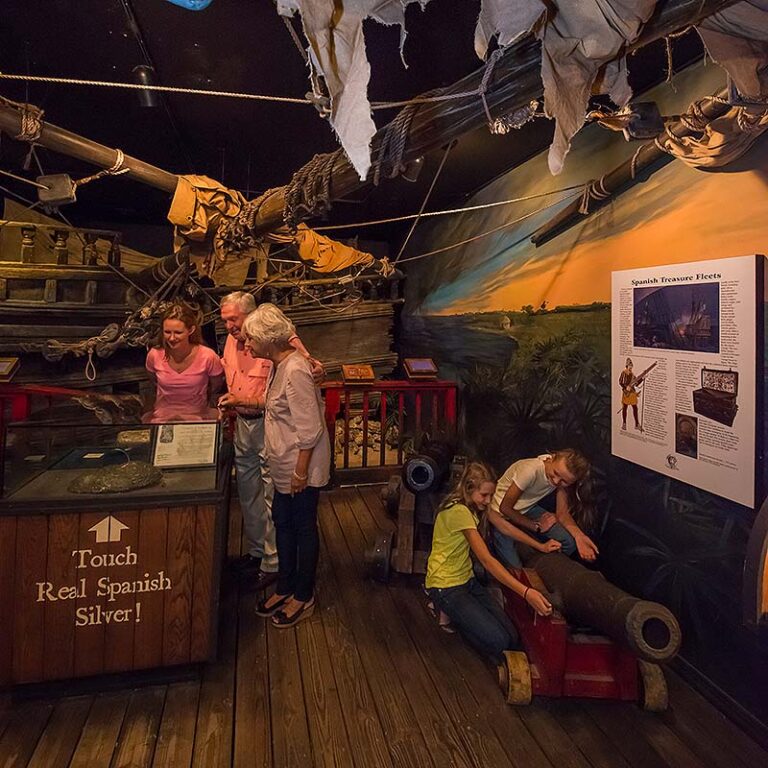
A combination of historical displays and private collections bring over 400 years of Florida history to life. The St. Augustine History Museum features displays of the various countries that ruled over St. Augustine: England, Spain, and France.
- Visit our Spanish sunken treasure room
- Explore how St. Augustine and Florida grew under the Spanish
- Hear fascinating stories about the Indians, the Spanish Galleons and the Pirates of the Revolutionary War
- More than 400 years of history on display
Save up
to 15%
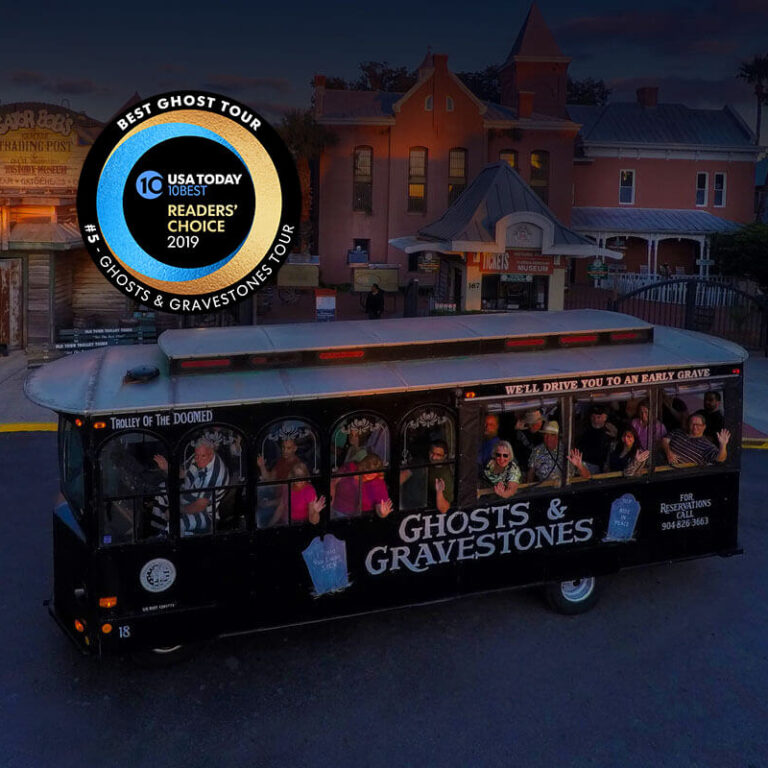
Ghosts & Gravestones Tour
to 15%
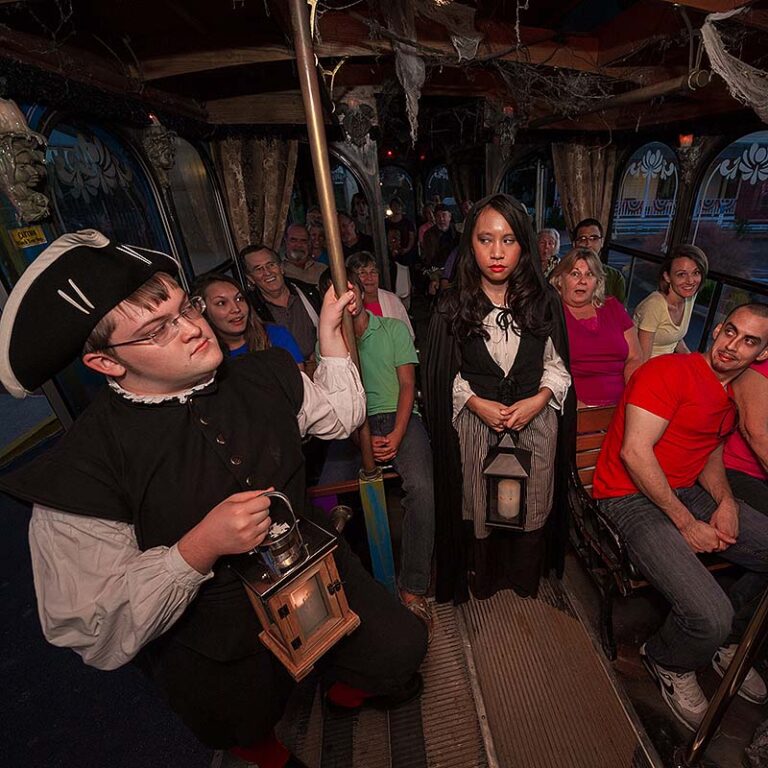
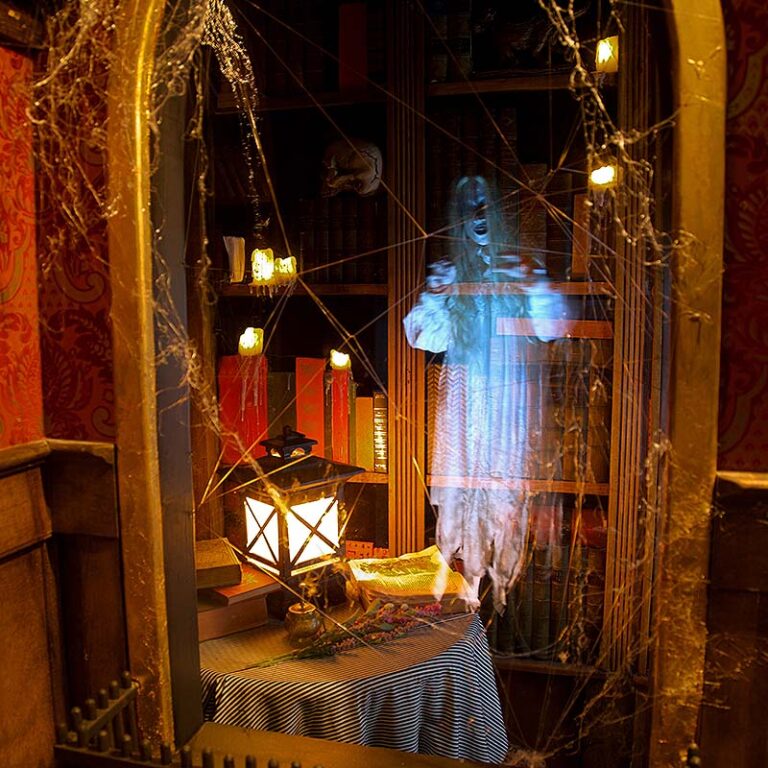
Prepare yourself for a Frightseeing Adventure like none other as your resident Ghost Host shares tales both true and truly unnerving of the city’s tumultuous past. Discover the secrets of the Tolomato Cemetery and the apparition seen playing on the sacred grounds after dark. Could it be the spirit of five-year-old James or is it the Ghost Bride, still waiting for her walk down the aisle. Be sure to keep a watchful eye while passing by the old City Gates. You might catch a glimpse of Elizabeth, a child victim of the yellow fever, waving to passersby.
- Advance Online Reservations Required
- Featured on the TODAY Show, Travel Channel, and SYFY channel as top St. Augustine tour
- 80-minute fully narrated nighttime Frightseeing experience
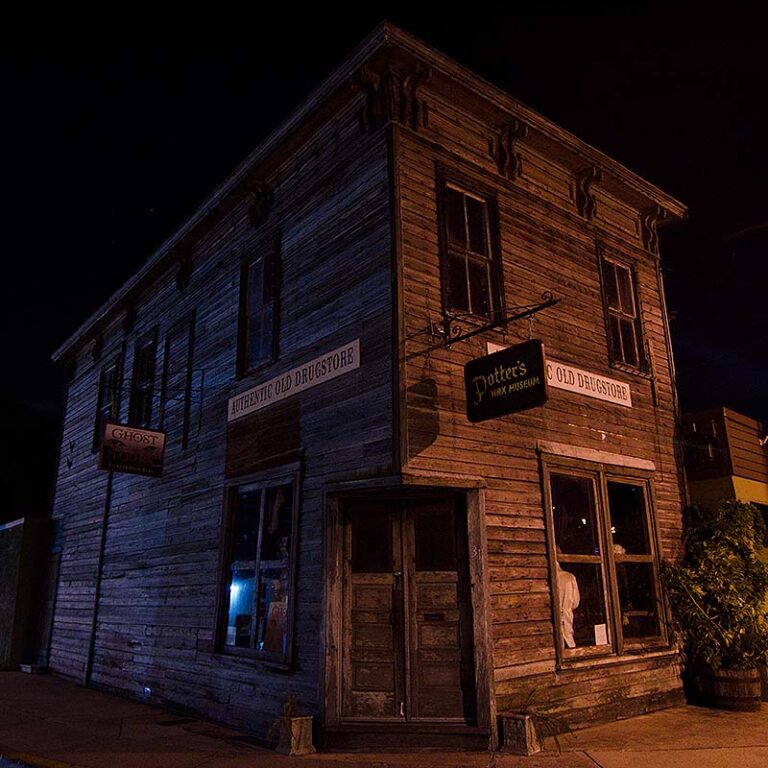
- Exclusive nighttime entry into Potter’s Wax Museum's "Chamber of Horrors"
- Enter the historic Old Jail after dark for an up-close paranormal encounter
- Visit Cromwell's Parlour of Paranormal Curiosities
- Live storytelling and local ghost legends led by costumed Ghost Hosts
- 100% Satisfaction Guarantee
Prev
Next
Friends and employees frequently described Elvis as generous. He supported hospitals and community organizations, and paid medical bills or helped people facing financial hardship.
Elvis lived much of his adult life at Graceland, his Memphis estate, which he purchased in 1957. The home became both a private retreat and a gathering place for family and friends. Today, Graceland remains one of the most visited historic homes in the United States and serves as a lasting reminder of his extraordinary career.
While Elvis was very successful, he also faced challenges. His fame and years of touring caused a lot of pressure and contributed to his poor health. During the 1970s, he developed a dependency on prescription medications. Although he continued entertaining, his health struggles contributed to his untimely death in 1977.
Did you know?
Friends and employees frequently described Elvis as generous. He supported hospitals and community organizations, and paid medical bills or helped people facing financial hardship.
Interesting Facts About Elvis Presley
Many details about Elvis’s life are just as fascinating as his music career. While most people recognize him for his chart-topping songs and unforgettable performances, an Elvis Presley biography reveals a number of surprising facts that highlight his unique personality, interests, and daily habits. These lesser-known stories continue to add to the enduring Elvis Presley legacy and help explain why he remains one of the most talked-about entertainers in history.
Elvis was naturally blonde. He started dyeing his hair dark brown when he was young because he believed it suited his appearance better and resembled his mother’s hair color. The dark hair became one of Elvis’s most recognizable features.
Elvis also had an extraordinary memory. Rather than learning to read sheet music, he relied almost entirely on listening. He could hear a song once or twice and quickly remember its melody, lyrics, and arrangement. Musicians who worked with him often commented on his ability to learn new material by ear, allowing him to move effortlessly between gospel, country, rhythm and blues, and rock ‘n’ roll without formal musical training.
Elvis developed an interest in martial arts while serving in the U.S. Army. He earned a black belt in karate, and his love of the sport influenced many of his stage performances.
Another interesting aspect of Elvis’s personality was his superstitious nature. Friends recalled that he avoided black cats, believed certain numbers brought either good or bad luck, and preferred following specific daily routines. He often dressed in a particular order before leaving home and paid close attention to personal rituals that made him feel comfortable before performances.
Elvis held onto habits formed during his childhood. One unusual example was carrying his own eating utensils when traveling. He liked using familiar silverware and often packed it with him on trips.
Elvis also collected unusual items, including police badges, firearms, custom cars, and jewelry. He loved giving away Cadillacs and other expensive gifts to friends, family members, and even strangers, earning a reputation as one of the most generous celebrities of his era. His collection of colorful jumpsuits, elaborate belts, and jeweled capes also became legendary, helping define his unforgettable stage presence during the 1970s.
These stories show that Elvis was far more than a talented singer. His remarkable memory, generosity, traditions, and interests made him a complex individual whose influence extends beyond music.
What Elvis Presley Is Most Known For
Elvis Presley is known for bringing rock ‘n’ roll into the mainstream in the 1950s and 1960s. As the “King of Rock ‘n’ Roll,” his powerful voice and distinctive style set him apart from other artists.
Elvis became famous for his charismatic stage presence. His energetic dance moves and confident performances captivated audiences. He appeared on programs such as The Ed Sullivan Show, which introduced him to millions of viewers.
Elvis also built a successful acting career, starring in 33 feature films beginning with Love Me Tender in 1956. While many of his movies were created as lighthearted musical comedies, they were popular with audiences and further expanded his worldwide fame. His ability to succeed in both music and film made him one of the first true multimedia celebrities.
One of the defining moments of his career was in 1968 on the NBC Comeback Special. After spending much of the previous decade focused on movies, Elvis returned to live performance with renewed energy and confidence. The special reminded audiences of his extraordinary talent and is widely considered one of the greatest television performances in music history. It marked the beginning of a successful return to recording and live concerts.
Even after his passing, Elvis Presley remains one of the best-selling music artists of all time. His songs continue to be played around the world, and his influence can be heard in countless genres of music.
“King of Rock ‘n’ Roll”
Elvis Presley is known for bringing rock ‘n’ roll into the mainstream in the 1950s and 1960s. His powerful voice and distinctive style set him apart from other artists.
Elvis Presley’s Music & Movie Career
Elvis Presley’s music changed the entertainment industry and helped define a new generation of popular culture. His professional career began in 1954 when he recorded at Sun Records in Memphis, Tennessee. Producer Sam Phillips recognized the originality of Elvis’s voice and encouraged him to combine elements of country music with rhythm and blues. His recording of “That’s All Right” became a regional success and introduced listeners to a fresh sound that would soon become known as rock ‘n’ roll. By 1956, Elvis had signed with RCA Victor and achieved international fame, quickly becoming one of the most recognizable entertainers in the world.
His hits such as “Heartbreak Hotel,” “Hound Dog,” “Don’t Be Cruel,” “Love Me Tender,” “All Shook Up,” and “Jailhouse Rock” dominated the charts. Elvis’s music stood out because it blended country, gospel, blues, and rockabilly, which appealed to many audiences.
As Elvis’s popularity grew, Hollywood took notice. He made his film debut in Love Me Tender (1956), launching a successful acting career that eventually included 33 feature films. During the late 1950s and 1960s, he starred in movies such as Loving You, King Creole, Blue Hawaii, Viva Las Vegas, and Girls! Girls! Girls! and Fun in Acapulco. Many of these films featured musical performances and became commercial successes, even if critics often gave them mixed reviews. Although some believed the movies relied too heavily on familiar storylines and musical numbers, audiences continued to support them, making Elvis one of Hollywood’s most reliable box-office attractions.
One of the most important moments in his career came in 1968 with the televised NBC Comeback Special. After several years focused primarily on films, Elvis returned to live performance with renewed confidence and reminded audiences why he had become such a legendary performer. The success of the special led to new recordings, sold-out concert tours, and an acclaimed residency in Las Vegas that lasted for much of the following decade.
Elvis’s accomplishments earned him recognition throughout the music industry. He received 14 Grammy Award nominations, won three Grammy Awards for his gospel recordings, and received the Grammy Lifetime Achievement Award in 1971 at just 36 years old. This makes him one of the youngest recipients in the award’s history. Today, both Elvis Presley music and Elvis Presley movies continue to introduce new generations to his extraordinary talent.
How Elvis Presley Lived Out the Remainder of His Life (End of Life)
The later years of Elvis’s career were marked by both renewed success and personal struggles. In the late 1960s, after spending much of the previous decade making movies, many believed his music career had slowed. However, everything changed with the 1968 NBC Comeback Special, which reminded audiences of his remarkable talent and stage presence. The televised performance received widespread praise and introduced Elvis to a new generation of fans. For many readers of an Elvis Presley biography, this special represents one of the greatest career comebacks in music history.
In 1969, Elvis became a regular headliner in Las Vegas. He also embarked on successful national tours, continuing to perform hundreds of shows throughout the 1970s.
Elvis faced growing health problems. Years of touring, poor sleep and eating habits, and increasing dependence on prescription medications began to take a serious toll on his health.
On August 16, 1977, Elvis Presley died at Graceland, his home in Memphis, Tennessee, at the age of 42. His death shocked fans around the world and marked the end of one of the most influential careers in entertainment history. While his life ended far too soon, the Elvis Presley legacy has continued to grow with each passing decade.
Today, Graceland serves as both a museum and a memorial, welcoming hundreds of thousands of visitors every year. His recordings continue to sell millions of copies, and his influence can still be heard in artists across countless musical genres. More than four decades after his passing, Elvis remains a defining figure in American music, proving that his talent and cultural impact have endured far beyond his lifetime.
FAQs
What were Elvis Presley’s most significant musical achievements?
Elvis Presley made rock ‘n’ roll popular around the world. He became one of the best-selling recording artists in history. He recorded numerous No. 1 hits, earned 14 Grammy nominations, won three Grammy Awards for gospel music, and received the Grammy Lifetime Achievement Award at just 36 years old.
How did Elvis Presley impact 20th-century popular culture?
Elvis Presley changed popular culture by introducing a fresh musical style that blended country, gospel, rhythm and blues, and rockabilly. His energetic performances, television appearances, films, and fashion inspired generations of musicians and entertainers, making him one of the most influential cultural figures of the twentieth century.
What are some of the most interesting facts about Elvis Presley’s personal life?
Elvis Presley was naturally blonde, learned music entirely by ear, and earned black belts in karate. He loved collecting cars and jewelry, often gave expensive gifts to friends and strangers, remained devoted to his family, and lived for many years at his famous Memphis home, Graceland.
What challenges did Elvis Presley face in his later years?
As Elvis Presley grew older, he struggled with declining health while maintaining a demanding concert schedule. He became dependent on prescription medications and was constantly going on tour. Due to poor health, he passed away at Graceland on August 16, 1977, at the age of 42.
How is Elvis Presley’s legacy preserved today?
Elvis Presley’s legacy is preserved through his recordings, films, museums, biographies, documentaries, and annual fan events. His music continues to reach new audiences, while Graceland welcomes visitors from around the world.
What is the significance of Graceland in Elvis Presley’s legacy?
Graceland was Elvis Presley’s home for two decades and is now one of America’s most visited historic homes. It preserves his personal belongings, awards, automobiles, costumes, and memorabilia. The site allows fans to learn about his life while honoring the remarkable legacy he left behind.