Biography of Franz Liszt
Franz Liszt’s place in music history is impossible to miss. He wasn’t just a brilliant pianist — he was the kind of performer who rewired the expectations of a whole era. People who heard him play described the experience as something closer to a shock than a recital. His music stretched the boundaries of what the piano could do, but so did his personality. Any Franz Liszt biography reads almost like the story of a man trying to outrun the limits of ordinary life. His restlessness drove him from city to city, stage to stage, reinventing himself as a composer, thinker, teacher, and public figure along the way. Few figures in Western art have shaped culture quite as intensely as Liszt, whose influence still lingers in both modern performance and the broader mythology of the Romantic age.
Born in 1811, Liszt grew up during a period of cultural upheaval and intense intellectual change across Europe. His early success as a pianist — unmatched in speed, style, and emotional force — catapulted him to fame. Audiences screamed, fainted, and scrambled for souvenirs from his performances, so much so that the phenomenon was famously labeled “Lisztomania.” Beyond celebrity, however, Franz Liszt’s history demonstrates a musician committed to experimentation and cultural leadership. He transformed piano technique, pioneered the symphonic poem, and championed new composers such as Wagner, Berlioz, and Grieg.
Despite his fame, Liszt never fit easily into a single identity. People didn’t know what to make of him half the time — one week he was labeled a genius, the next a rebel, and sometimes something stranger still, depending on who was doing the describing. The facts about Franz Liszt that emerge from his story reveal a personality who refused limitations and embraced reinvention. His career zig-zagged in unexpected ways: an intense touring schedule, long stretches where he gave away more money than he kept, bursts of daring composition, and eventually a deep drift into religious study.
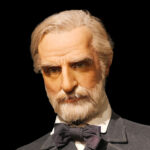
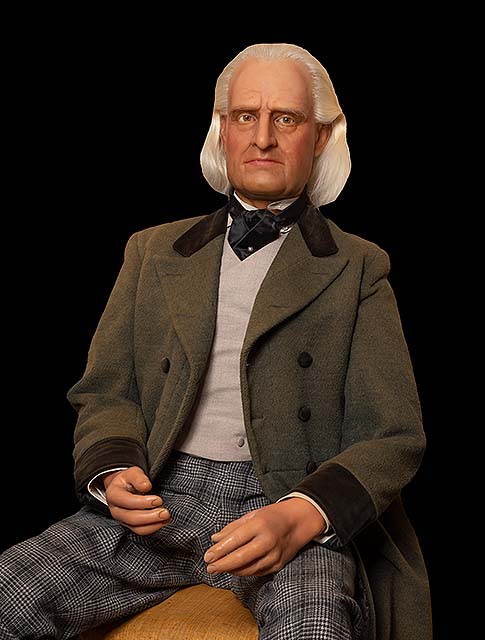
Today, museums and cultural institutions examine Liszt not merely as a musician but as a phenomenon that shaped public performance, celebrity culture, and musical innovation. For visitors at places like the St. Augustine Museum, Potter’s Wax Museum, the presence of a figure devoted to artistic revolution allows modern audiences to visualize not only the man, but the dramatic era of Romantic performance he helped create. Exhibits that bring Liszt to life underscore how Franz Liszt’s music has continued to inspire generations long after his final performances ceased.
DID YOU KNOW?
One week Liszt was labeled a genius, the next a rebel, and sometimes something stranger still.
The story of Liszt is one of genius and transformation, of innovation and excess, and of a deep desire to create art that spoke not only to the intellect but to the spirit. As Franz Liszt’s history unfolds, it becomes clear why he continues to be studied, celebrated, and reinterpreted centuries after his birth.
Early Life of Franz Liszt
Any detailed account of Franz Liszt’s history begins with his childhood in the small village of Raiding, in what is now Hungary. Born on October 22, 1811, he was raised by parents who recognized his talent early. His father, Adam Liszt, worked for the Esterházy family — the same noble household once served by Joseph Haydn — and was an amateur musician himself. From a young age, Franz displayed extraordinary aptitude, reproducing complex melodies on the piano before receiving formal lessons.
By age 9, he was performing publicly. His early achievements attracted wealthy patrons, who funded his studies in Vienna, where he studied piano with Carl Czerny and composition with Antonio Salieri. This period shaped Liszt’s artistic foundation, giving him both technical rigor and exposure to the highest level of musical culture.
The emotional, virtuosic style that would define Franz Liszt’s compositions developed from the combination of disciplined training and a naturally flamboyant musical personality.
Liszt’s family relocated to Paris in 1823, but he was rejected from the Paris Conservatoire because he was foreign. Instead, he pursued private study, rapidly becoming a sensation in Parisian musical circles. His performances were so powerful that critics struggled for language to describe them; audiences reacted not simply to sound, but to a physical experience that seemed unprecedented.
Despite early success, Liszt faced personal turmoil. His father died when he was 16, leaving him responsible for his mother and forcing him to reevaluate his career. Influenced by intellectual and spiritual movements, he considered entering the priesthood, but ultimately returned to music. These early struggles shaped the introspective, restless identity central to most Franz Liszt Biography narratives.
By his 20s, Liszt had emerged as a leading figure of Romantic artistic culture, befriending fellow innovators such as Chopin, Berlioz, and Paganini. He absorbed their ideas while developing his own identity as both performer and composer.
Interesting Facts About Franz Liszt
Although Liszt is best remembered for his innovations and dramatic concert performances, many Franz Liszt facts reveal unexpected aspects of his life:
Liszt was known for having an extraordinary memory, able to learn complex works after a single reading. He performed entirely without sheet music long before it became standard, a practice that revolutionized public recitals.
His performances generated unprecedented public passion. Fans collected locks of his hair, broken piano strings, gloves, and discarded cigar stubs. Women reportedly fought over items he touched. This cultural frenzy, dubbed “Lisztomania,” has often been compared to modern celebrity fandom.
Liszt poured huge portions of his concert earnings into churches, fellow musicians, and whatever charitable cause caught his attention at the time. His financial generosity was so expansive that he often ended up short with his own personal funds.
His love affairs and artistic collaborations were equally dramatic. He had long, complex relationships with Countess Marie d’Agoult and Princess Carolyne von Sayn-Wittgenstein, both of whom influenced the course of Franz Liszt’s music and personal philosophy.
Visitors exploring music history through exhibits at places like Potter’s Wax Museum may encounter representations of Liszt’s iconic image: long hair, striking profile, and clothing that signaled both religious austerity and theatrical flair. These displays illuminate how the legend of Liszt was shaped not only by accomplishments but by charisma.
Major Milestones and Accomplishments by Franz Liszt
In studying Franz Liszt’s history, his milestones reveal why he is regarded as one of the most important artists in Western music.
As a performer, Liszt revolutionized the public recital. He was the first to perform solo concerts in large venues, shaping the cultural expectation of virtuoso performance. His eclectic programming, expressive gestures, and technical brilliance made him a model for modern pianists.
DID YOU KNOW?
Liszt was the first to perform solo concerts in large venues.
As a composer, he expanded musical language. Franz Liszt’s compositions include groundbreaking works such as the symphonic poem, a new form linking narrative and orchestral music. His piano compositions, including the Transcendental Études and Hungarian Rhapsodies, pushed the limits of difficulty, expressiveness, and national identity.
Liszt also served as a major advocate for other composers. He arranged works, conducted premieres, and helped establish institutions that advanced musical literacy.
His influence helped bring wider recognition to Wagner, Berlioz, and others, altering the trajectory of 19th-century music.
Another critical contribution was his role as a teacher. He developed new piano techniques still used today and mentored countless students who shaped modern performance traditions.
These achievements explain why museum exhibits often feature Liszt as a symbol of artistic evolution. Whether at St. Augustine’s Potter’s Wax Museum, representations of the Franz Liszt artist highlight how his innovations defined both the art and culture of his era.
Late in Life
In the 1850s, Franz Liszt gave up touring and entered a quieter period, focusing on composition and teaching. He took up minor religious orders in Rome and adopted a simpler lifestyle often described as monastic.
We find in the biography of Franz Liszt that even later in life, he remained deeply connected to music. He divided his time between Budapest, Weimar, and Rome, teaching aspiring composers and continuing to push the boundaries of harmony and form. Many late Franz Liszt compositions are stark, experimental, and surprisingly modern, foreshadowing 20th-century music.
Despite sustained creativity, his health declined. Falls, accidents, and respiratory illness plagued his final years. He died on July 31, 1886, in Bayreuth, Germany, at the age of 74, while attending Wagner’s festival. His death marked the conclusion of a life lived at the edge of artistic imagination.
Yet the significance of Franz Liszt’s music continued to grow, influencing composers from Debussy to Bartók to modern pianists. Exhibits dedicated to him remain popular, and places like Potter’s Wax Museum use his story to illustrate how artistry, personality, and innovation can reshape history.
FAQs
When was Franz Liszt born?
Franz Liszt was born on October 22, 1811, in the village of Raiding, Hungary. His early life, shaped by musical training and cultural exposure, set the foundation for later achievements that define Franz Liszt’s history.
What is Franz Liszt famous for?
Liszt is famous for his virtuoso performances, pioneering piano techniques, and influential compositions, including the symphonic poem and the Transcendental Études.
How did Franz Liszt die?
Liszt died on July 31, 1886, after suffering from illness and complications related to falls. His final years reflected a commitment to teaching, spirituality, and late-style innovation in Franz Liszt’s music.
What did Franz Liszt play?
Liszt was a pianist known for unmatched technical brilliance and emotional depth. His mastery of performance transformed expectations for musicians.
How many compositions did Franz Liszt write?
Liszt composed more than 700 works, including orchestral pieces, religious music, piano compositions, and transcriptions, making his output one of the most extensive in Western music.