The Legend & Legacy of Davy Crockett
Born on August 17, 1768, in eastern Tennessee, the humble boy of David Crockett would grow up to become one of the most prolific heroes of American frontier history and legend. Despite the challenges that arose from being one of 9 children in a family that struggled to make ends meet, Davy Crockett pushed past these barriers and gained national repute through his determination and service as both a soldier and politician. From fighting in the War of 1812 and the Texas Revolution to serving three separate terms in U.S. Congress, Crockett displayed his deep respect and dedication for the nation and its independence.
A Davy Crockett biography is incomplete without highlighting his defense of the Alamo. This fight would ultimately solidify his legacy as an American hero and cost him his life in the process. Defending his country until the very end, Crockett stood his ground at the Alamo until overpowered by the Mexican forces, passing away at the young age of 49 on March 6, 1836. Davy Crockett’s life and sacrifice became symbols for American freedom and rugged individualism, leading many to embellish myths and folklore surrounding his name in honor of his legendary service to the United States.
Though the myth and legends might not be factually accurate, what lies beneath them is the story of a man who gave hope to those on the frontier and protected the American spirit of independence. Over 200 years later, Davy Crockett still represents the heart of the United States and inspires the patriotism that unites this nation.
DID YOU KNOW?
Davy Crockett’s life and sacrifice became symbols for American freedom and rugged individualism...
Early Years: Born into Hardship, Determined for More
On August 17, 1768, John and Rebecca (Hawkins) Crockett welcomed their fifth child, David Crockett, in Greene County, Tennessee. Despite being known for his high position and prominence in the United States government later in life, Davy Crockett’s early life was not the lavish experience with which many politicians were gifted. Davy was the fifth of nine children in the Crockett home, and it was abundantly clear the household did not have the financial stability to sustain such a large family. John Crockett would file for bankruptcy numerous times, relocating the family over four times before Davy was 10 years old. Due to this unstable, struggling upbringing, Crockett did not receive much of a formal education, focusing rather on the survival skills of the frontier.
His father first taught him to use a rifle at only 8 years old, inspiring his love for shooting and hunting at an early age, skills that he would utilize and master throughout his life. Due to being accustomed to an unconventional and adventurous form of education, Davy rebelled when his father tried to enroll him and his brothers in a traditional school, starting fights with another student and ditching class numerous times. When John learned of this behavior, he tried to reprimand Davy, though it only inspired further disobedience, leading Crockett to run away at age 13.
In his years away, Davy honed his woodsman skills and apprenticed for a hatter in Virginia named Elijah Griffith, before deciding to return home to aid his family in settling their debts. He journeyed back to Tennessee and allowed his father to indenture him to several men to whom he owed large sums of debt. This service to his family after years of separation is a clear example of Crockett’s loyalty despite having such an independent spirit, a trait seen all throughout Davy Crockett’s biography. Though his upbringing built numerous barriers around his chance for success, Davy used each of these hurdles as an experience to rise in skills and build his spirit. The harsh reality of Davy Crockett’s early life built his resilience and adventurous spirit, setting the stage for his future years.
Personal Life: Loyalty to Family & Freedom
Davy Crockett married Mary (Polly) Finley on August 14, 1806. Despite her mother’s initial disapproval, Crockett declared he would marry Polly no matter the circumstances, vowing his loyalty. After making amends with Mrs. Finley, the newlyweds settled near Polly’s family home and had three children, John Wesley, William Finley, and Margaret Finley (Polly) Crockett. Three years after Margaret’s birth, Polly fell ill and died in March of 1815. Devastated by this loss, Davy asked his brother John and sister-in-law to move in temporarily in order to help support the children. Soon after, Crockett would go on to meet a fellow widow, Margaret Patton, whom he would marry that same year, 1815. Davy and Margaret had three additional children of their own: Robert Patton, Rebecca Elvira, and Matilda Crockett. Similar to his upbringing, Davy struggled with sustaining financial stability for such a large household in his younger years, but stayed committed to ensuring his family’s well-being. Despite becoming such a prominent figure as he aged, he was known for staying true and loyal to his family, no matter the fame in his public life. Loyalty, once again, acts as a significant theme in Davy Crockett’s biography, as the rugged, free-spirited man of myths stayed just as committed to his wife and children as he did to his country in battle.
Interesting Facts About Davy Crockett: A Man of Myths
Since Davy spent much of his youth training in the skills of hunting and storytelling rather than focusing on a formal education, he rose to a legendary status in these arts. He was renowned for his shooting ability, a gift that would secure his prowess as a soldier. Due to such mastery in these rugged survival skills, Crockett became known as the paragon of a frontier man, leading many young boys to aspire to be like him. This significant, nationwide respect for Davy led to widespread myths and tales of the folk hero—stories that, although greatly exaggerated, cannot be ignored in a Davy Crockett biography. It was these legends that proliferated his character, elevating his name to hold the deep significance that it held then, and still holds now in America.
DID YOU KNOW?
Crockett was renowned for his shooting ability, a gift that would secure his prowess as a soldier.
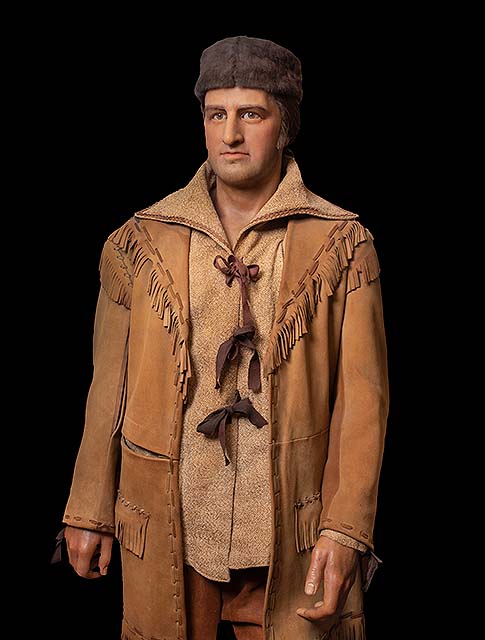
In 1831, the play “The Lion of the West,” inspired by Crockett’s life, rose to fame, further enhancing his status as a folk hero. Despite these stories advancing his image to the nation, Crockett, being the humble man he was, tried to counter these exaggerated tales by releasing his autobiography, A Narrative of the Life of David Crockett, in 1834. Davy focused on highlighting his real accomplishments rather than allowing the nation to praise him for false legends, displaying his honest nature. Disregarding these fantasy tales, Crockett’s true character and achievements still tell of a man of wit and charm, which significantly aided him in his military and political triumphs. With this social prowess, humble nature, and numerous bear hunting and adventure tales, it is no surprise that Davy Crockett rose to such high regard in the United States, acting as a role model to millions of children with their coonskin caps swaying in his image.
The Davy Crockett State Park, Boone and Crockett Club, the Crockett County Museum, and over 40 other memorial sites spread throughout Tennessee and Texas honor his name and dedication to this country, displaying how this man of many talents is still cemented into our idea of the American spirit.
What is Davy Crockett Known for: A Life of Service & Sacrifice
Davy Crockett had become famous as the mythical frontier man, his service in the War of 1812, and his position in Congress, but the Alamo siege is what truly formed his lasting legacy. Davy Crockett became most famous for his dedication in his role of defending the Alamo against Mexican troops through 13 days of battle from February 23 to March 6, 1836. Despite only having around 200 Texas soldiers compared to the Mexican forces of over 1,800 men, Davy never gave up, giving his life to this battle. He knew this battle would most likely end his life, but he kept hope and resistance until his last moments on March 6, 1836. His dedication to the Mexican Revolution and defense of the Alamo cemented him as a historical hero and symbol of courage and the frontier spirit. He became a national hero, leading to his representation and portrayals in Hollywood. Though while alive Davy dismissed the myths around his name, Davy Crockett has inspired over 30 books, theatrical, and film adaptations based on his legendary life, with even Walt Disney producing a television series in his name. These forms of media and over 40 monuments throughout the nation show the devotion our country maintains to rightfully remember and honor his life. His achievements and stories of bravery truly show the dedication to continue the Davy Crockett legacy.
Davy Crockett’s Military and Political Career: Crockett’s Lifelong Dedication to America
Davy Crockett’s military career began at 27 years old, when Davy left his family to join the Company of Mounted Riflemen within the Tennessee militia and defend Tennessee against the Creek Indians during the Creek War. He continued this career by re-enlisting in the War of 1812 within the Tennessee militia and the Tennessee Mounted Gunmen. Even after his years of military service, Davy Crockett’s political career continued to show dedication to the United States. On March 27, 1818, Davy Crockett was elected lieutenant colonel of the Fifty-seventh Regiment of Tennessee Militia, securing his future roles in politics. After several years in this position and his role in the Tennessee General Assembly, Crockett was nominated and successfully defeated his political opponents for a seat in the United States House of Representatives. He served three terms in 1827, 1829, and 1833 and was an active member in the National Republican Party, also known as the Anti-Jacksonians, due to his opposition to President Andrew Jackson. He was particularly known for being the only member of the Tennessee delegation to fight against the Indian Removal Act in 1830. This bravery to fight against his other members even led to receiving a letter from the Cherokee Chief, John Ross, thanking him for his resilience. Throughout his terms in office, he was also known for his advocacy for settlers’ rights, displaying his loyalty to the common man. Both Davy Crockett’s military and political careers represent the American spirit and true dedication to the United States, solidifying his legacy in our country.
How Davy Crockett Lived Out the Remainder of His Life: An American Hero Until the End
A Davy Crockett biography cannot be fulfilled without highlighting his life-ending dedication to the Texas Revolution. He joined the Revolution in San Antonio, Texas, in early 1836, soon fighting for the defense of Texas for over 13 days, led by William Barret Travis. Despite being severely outnumbered by the Mexican forces led by Antonio López de Santa Anna, Davy and the rest of his men continued to fight until the very end, not backing down from the siege.
DID YOU KNOW?
Crockett joined the Texas Revolution in San Antonio, Texas, in early 1836, soon fighting for the defense of Texas for over 13 days...
The final Battle of the Alamo on March 6, 1836, only lasted 90 minutes as they were swarmed by the Mexican troops, leading to Davy Crockett’s death. The exact details of his death are unknown, leading to more legends, though Davy’s martyrdom for this country secured his role as a true American hero. His legacy continues to persist through pop culture and memorials, honoring his resilience and passion for the United States.
FAQs
Why is Davy Crockett famous for the Alamo?
Davy Crockett is famous for the Alamo due to his dedication despite having significantly low odds of victory and fighting until his death. Though outnumbered by the Mexican forces, Davy and his comrades continued the battle against the siege, being defeated after only 90 minutes. He sacrificed his life, becoming a martyr and hero for the United States.
What were Davy Crockett’s major contributions as a politician and soldier?
Davy Crockett contributed as a soldier by fighting in the Creek War, the War of 1812, and the Texas Revolution in the Battle of the Alamo. His political contributions consist of achieving three terms in the House of Representatives, standing against President Jackson, and opposing the Indian Removal Act of 1830.
How did Davy Crockett impact American frontier history?
Davy Crockett impacted American frontier history by becoming a national symbol of the American spirit, acting as a legendary figure and representation of frontiersmen. His hunting abilities and rise from poverty led to hundreds of myths and legends surrounding his name, inspiring frontiersmen and children throughout America.
What organizations or memorials honor Davy Crockett today?
Examples of organizations and memorials that continue to honor Davy Crockett include the Davy Crockett State Park in Tennessee, the Boone & Crockett Club, and the Crockett County Museum. There are over 40 other memorials and museums throughout Texas and Tennessee that honor Davy Crockett’s legacy. He is also honored in over 30 pop culture media, including books, TV shows, films, and plays.
What is unique about Davy Crockett’s personal life and legacy?
Davy Crockett rose from a poverty-stricken family struggling to make ends meet, with very little formal education, to become one of the most well-known figures in America. He defied all odds by using his hunting skills and charisma, dedicating and losing his life to the United States. He rose from a life as an indentured servant to a national symbol.