Frankenstein’s Monster is one of the most recognizable figures in literary history and the central character of Mary Shelley’s 1818 novel Frankenstein; or, The Modern Prometheus. Although often mistakenly called “Frankenstein,” the creature is actually the creation of scientist Victor Frankenstein, who brings him to life through a combination of scientific experimentation and alchemical methods. The Frankenstein’s Monster biography remains one of literature’s most enduring stories because it explores themes of acceptance and isolation.
After being abandoned by his creator, Frankenstein’s Monster must learn about the world on his own. Despite being intelligent and capable of compassion, he faces rejection and fear wherever he goes because of his appearance. As his loneliness grows, his desire for friendship gradually turns into anger and a quest for revenge against Victor Frankenstein.
Frankenstein’s Monster is portrayed as both a sympathetic and frightening figure. His tragic struggle for acceptance has inspired countless adaptations in film, television, and popular culture.
Early Years
The Frankenstein’s Monster’s early life begins after he is abandoned by Victor Frankenstein shortly after his creation. Alone and confused, the creature wanders through the countryside searching for food and shelter. Eventually, he discovers a small hovel attached to a cottage occupied by the De Lacey family. Hidden from view, Frankenstein’s Monster secretly observes the family and becomes fascinated by their kindness, relationships, and way of life.
The creature teaches himself to speak and read by listening to and watching the De Laceys. He studies several books he finds, like John Milton’s Paradise Lost. This book helps him understand human nature, morality, and his place in the world.
A major turning point in the biography of Frankenstein’s Monster occurs when he discovers Victor Frankenstein’s notes describing the experiment that brought him to life. Reading the journal shows the truth and the disgust his creator felt toward him.
Hoping to find acceptance, Frankenstein’s Monster eventually introduces himself to the De Lacey family. He first speaks with the family’s blind father. He believes he will not be judged by his appearance. However, when the other family members return and see the creature, they react with fear. This painful rejection destroys his hope for companionship and sets him on a path that will ultimately lead to conflict with Victor Frankenstein.
The creature teaches himself
He studies several books he finds, like John Milton's Paradise Lost. This book helps him understand human nature, morality, and his place in the world.
Personal Life
A key part of Frankenstein’s Monster biography is his deep emotional capacity and desire for love, friendship, and acceptance. Although he is often portrayed as a terrifying creature, Frankenstein’s Monster begins his life with a kind and curious nature. He admires the compassion and affection he sees among people and hopes to experience those same connections himself.
Despite his good intentions, Frankenstein’s Monster is repeatedly judged by his appearance rather than his character. Wherever he goes, people react with fear and hostility, refusing to see the intelligence and sensitivity beneath his frightening exterior. This leaves him feeling isolated and abandoned and affects him in the long run.
As the creature’s loneliness grows, his hope for acceptance gradually turns into bitterness and anger. Frankenstein’s Monster becomes convinced that he will never be treated as an equal and begins seeking revenge against Victor Frankenstein, whom he blames for his suffering. Many of the tragic events in the novel result from the creature’s overwhelming feelings of rejection and despair.
Mary Shelley portrays him as a complex character rather than a purely evil one. His actions are largely driven by loneliness, isolation, and society’s refusal to accept him.
Interesting Facts About Frankenstein’s Monster
There are many fascinating facts about Frankenstein’s Monster that have helped make him one of the most recognizable characters in literature and popular culture. One of the most common misconceptions is that the creature’s name is actually Frankenstein. In Mary Shelley’s novel, Frankenstein; or, The Modern Prometheus, “Frankenstein” refers to the scientist Victor Frankenstein, while the creature is never given a personal name. Because of this, he is most accurately known as Frankenstein’s Monster.
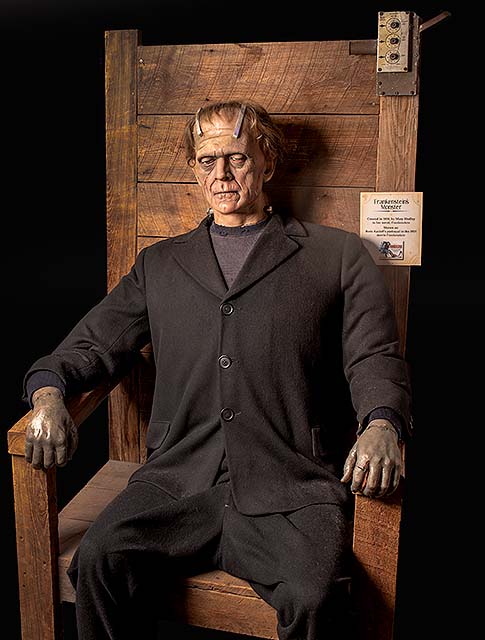
Another interesting aspect of Frankenstein’s Monster biography is how different the creature appears in the original novel compared to modern adaptations. In the book, Mary Shelley describes him as having yellow skin, watery eyes, black lips, and long black hair. However, many film versions, especially the famous 1931 Universal Pictures adaptation starring Boris Karloff, gave the creature a flat head, neck bolts, and a stiff appearance. These features became so popular that they are now closely associated with Frankenstein’s Monster, even though they were not part of Shelley’s original description.
Many people are also surprised to learn that Frankenstein’s Monster is highly intelligent and articulate in the novel. After teaching himself to read and speak, he discusses philosophy, morality, and human nature with remarkable insight.
Frankenstein’s Monster has also had a lasting influence on the Gothic horror genre and popular culture. Since the novel’s publication in 1818, the character has appeared in many different forms across films, television shows, comic books, stage productions, and literary works.
What Frankenstein’s Monster is Most Known For
Frankenstein’s Monster is best known for being the tragic creature at the center of Mary Shelley’s 1818 novel Frankenstein; or, The Modern Prometheus. Created by Victor Frankenstein through a mysterious scientific experiment, the monster became one of the most famous figures in Gothic literature. Although the original novel presents him as intelligent, emotional, and deeply lonely, later adaptations helped shape the frightening image most people recognize today.
Frankenstein’s Monster became even more iconic through James Whale’s 1931 film adaptation, which starred Boris Karloff as the creature. The flat head, heavy eyelids, stiff walk, and neck bolts became strongly associated with the character in popular culture.
The creature is also known for his tragic quest for acceptance and revenge. After being rejected by his creator and society, he becomes angry and vengeful. His story has influenced countless movies, books, television shows, and cultural references.
Frankenstein's Monster's Quest for Revenge and Final Confrontation
A major turning point in the story occurs when Frankenstein’s Monster’s quest for revenge begins after he is repeatedly rejected by society and abandoned by his creator, Victor Frankenstein. Feeling betrayed and alone, the creature blames Victor for his suffering and demands that a female companion be created for him. When Victor destroys the unfinished companion out of fear of what might happen, the Monster vows revenge. He carries out this threat by targeting the people Victor loves most, including his close friend Henry Clerval and his bride, Elizabeth Lavenza. These tragic events deepen the conflict between creator and creation and drive Victor to pursue the Monster across Europe and into the Arctic wilderness.
The story reaches its climax in the frozen Arctic, where Victor Frankenstein chases the creature in a final attempt to stop him. During the pursuit, Victor becomes exhausted and is rescued by the explorer Captain Robert Walton and his crew. Before long, Victor dies aboard Walton’s ship, but not before sharing his story and warning about the dangers of unchecked ambition.
Turning Point
Feeling betrayed and alone, the creature blames Victor for his suffering and demands that a female companion be created for him.
After Victor’s death, Frankenstein’s Monster appears aboard the ship and recounts his own tragic tale to Captain Walton. He expresses deep regret for the suffering he caused and reveals that his actions were driven by loneliness, rejection, and despair. Realizing that he has lost both his creator and any hope of happiness, the creature announces his intention to end his own life. He then departs into the Arctic darkness on an ice raft, never to be seen again.
The ending of the novel has inspired countless Frankenstein’s Monster adaptations, including the Universal film series starring Boris Karloff, numerous sequels, television productions, and modern reinterpretations. These adaptations have helped keep the character relevant for generations while exploring different versions of his tragic story and final fate.
How Frankenstein's Monster is Portrayed in Adaptations
Over the past two centuries, Frankenstein’s Monster adaptations have transformed the character from Mary Shelley’s original literary creation into one of the most recognizable figures in popular culture. In Shelley’s 1818 novel, Frankenstein’s Monster is intelligent, articulate, and deeply emotional. He learns to read, reflects on his existence, and longs for companionship and acceptance. However, many film adaptations have emphasized his frightening appearance and immense strength rather than his intellectual abilities.
One of the most influential portrayals of Frankenstein’s Monster appeared in Universal Pictures’ 1931 film Frankenstein, directed by James Whale and starring Boris Karloff. Karloff’s performance introduced many of the visual characteristics now associated with the character, including the flat head, heavy eyelids, neck bolts, and stiff movements.
Karloff returned to the role in several sequels, including Bride of Frankenstein (1935), which is often considered one of the greatest horror films ever made. Decades later, the character continued to evolve in new adaptations, including the comedy film Young Frankenstein (1974), which lovingly parodied the Universal films while introducing the Monster to a new generation of audiences.
The lasting popularity of Frankenstein’s Monster has had a significant impact on pop culture and film history. The character has appeared in countless movies, television shows, comic books, video games, and stage productions. Through these many adaptations, Frankenstein’s Monster has remained a powerful symbol of humanity, loneliness, and the consequences of scientific ambition, ensuring his place as one of the most enduring characters in horror history.
FAQs
What is the origin of Frankenstein’s Monster in Mary Shelley’s novel?
Frankenstein’s Monster originates in Mary Shelley’s 1818 novel Frankenstein; or, The Modern Prometheus. The creature is brought to life by scientist Victor Frankenstein through a combination of scientific experimentation and alchemical methods. After successfully creating the Monster, Victor is horrified by his appearance and abandons him, setting in motion the tragic events that follow throughout the novel.
How does Frankenstein’s Monster’s portrayal differ across various adaptations?
In Mary Shelley’s novel, Frankenstein’s Monster is intelligent, articulate, and emotionally complex. However, many film adaptations portray the creature as a slow-moving and frightening monster.
What are some notable adaptations of Frankenstein’s Monster in film and literature?
Some of the most famous adaptations include Universal Pictures’ Frankenstein (1931), starring Boris Karloff, and its sequel Bride of Frankenstein (1935). Other notable portrayals appear in Young Frankenstein (1974), numerous stage productions, comic books, television series, and modern retellings of Mary Shelley’s novel. These adaptations have helped keep Frankenstein’s Monster popular for more than two centuries.
How does the Monster’s quest for revenge impact the story?
Frankenstein’s Monster’s quest for revenge drives much of the novel’s conflict. After suffering repeated rejection and loneliness, the creature blames Victor Frankenstein for his misery. His actions lead to the deaths of several people close to Victor, ultimately resulting in a final pursuit across the Arctic.
What is the significance of Frankenstein’s Monster in Gothic literature and horror?
Frankenstein’s Monster is one of the most important figures in Gothic literature and horror. The character embodies themes of isolation, scientific ambition, responsibility, and the desire for acceptance. His story explores the consequences of creating life without considering the moral responsibilities involved. Because of these themes, Frankenstein’s Monster continues to influence literature, film, and popular culture around the world.