Biography of Lord Voldemort
Not many villains in modern literature feel as terrifying as Lord Voldemort. Also called “He Who Must Not Be Named,” Lord Voldemort has become one of the most complex antagonists in the entire Harry Potter saga. This Lord Voldemort biography explores how a gifted young wizard named Tom Riddle transformed into some sort of dark creature who embodied fear, power, and immortality. His story is one of ambition and corruption — an exploration of what happens when genius is consumed by obsession and the desire to conquer death.
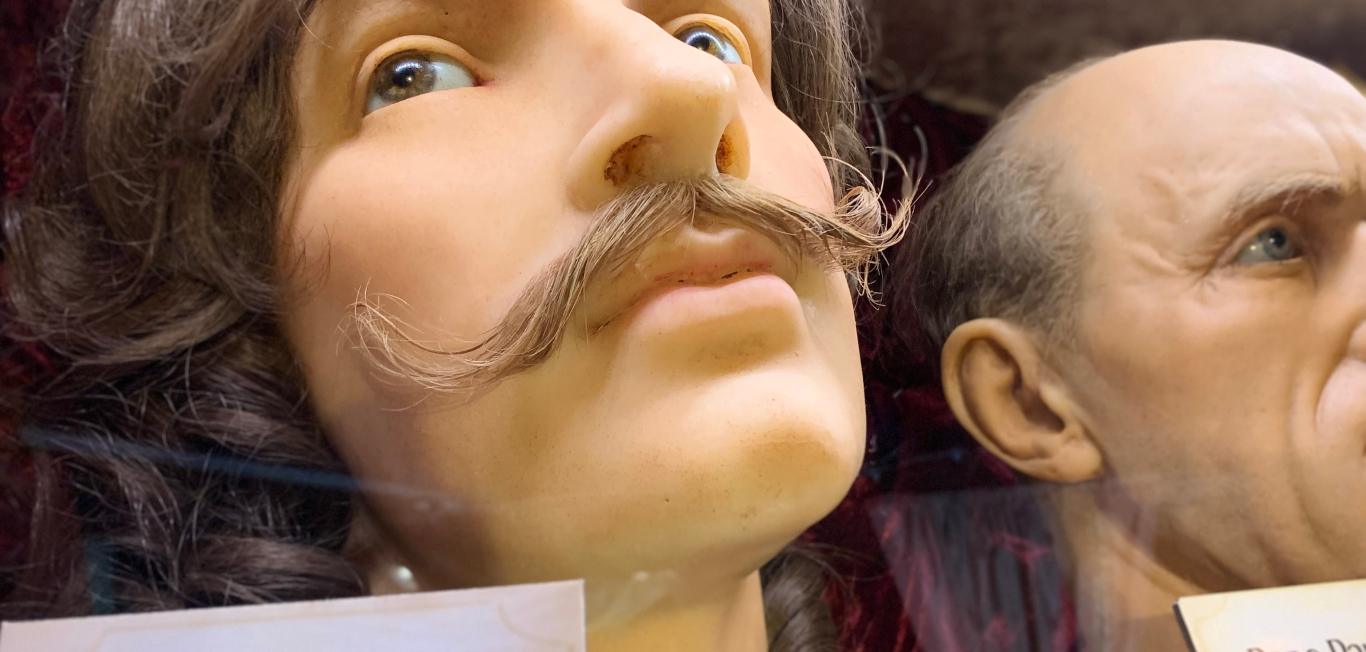
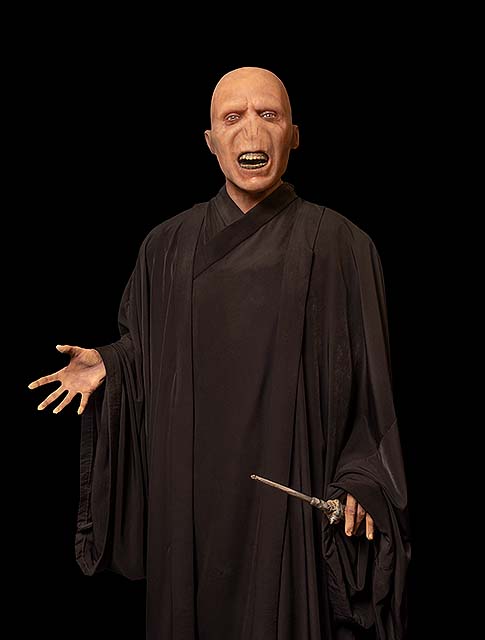
At the St. Augustine Museum, Potter’s Wax Museum, a lifelike figure of Lord Voldemort stands among other famous characters. Seeing it up close is a chilling reminder of why he’s one of literature’s most feared villains. His pale face, serpent-like eyes, and soft-spoken, eerie voice remind us of how influential his character has been in the Harry Potter universe.
Who is Lord Voldemort?
Lord Voldemort, who was born Tom Marvolo Riddle, is the main villain in J.K. Rowling’s Harry Potter series. People know him by many names — Voldemort, Tom Riddle, and the infamous “He Who Must Not Be Named”. He’s obsessed with purebloods and the idea of living forever. His name itself is derived from the French phrase “vol de mort,” meaning “flight from death.” This suits his defining fear and motivations as the series’ antagonist.
In the books and films, Voldemort is portrayed as a brilliant but cruel sorcerer who manipulates others through fear and charisma. He stands as the counterpart to Harry Potter, representing the consequences of unchecked power and moral decay. Harry and Voldemort seem bound from the moment Harry is born — a connection that follows them both for the rest of their life. Lord Voldemort’s story, within the Harry Potter universe, reveals a tragic arc: from a gifted Hogwarts student to a broken soul, who is inevitably stripped of empathy and bound only to darkness.
DID YOU KNOW?
Voldemort's name is derived from the French phrase “vol de mort,” meaning “flight from death.”
At the Potter’s Wax Museum in St. Augustine, a striking wax figure of “He Who Must Not Be Named” captures his eerily commanding presence. It is a reminder that while Tom Riddle was once human, Lord Voldemort is something far beyond it — an embodiment of the true terror that lies within immortality.
Where Does Lord Voldemort Come From?
To understand Lord Voldemort, one must first understand Tom Riddle. Born on December 31, 1926, in a London orphanage, Tom Marvolo Riddle was the son of Merope Gaunt, a witch descended from Salazar Slytherin, and Tom Riddle Sr., a wealthy Muggle. His mother died shortly after childbirth, leaving him abandoned and unloved. His father had fled upon discovering her magical nature.
Voldemort’s story starts in a lonely, harsh orphanage. Even as a boy, Tom Riddle showed magical talent — and a disturbing streak of cruelty. At eleven, he was visited by Albus Dumbledore, who offered him a place at Hogwarts School of Witchcraft and Wizardry. Sorted into Slytherin House, Tom Riddle became an exemplary student: intelligent, handsome, and charming. Yet beneath that facade brewed arrogance and a deep resentment toward his Muggle heritage.
While still at Hogwarts, Tom Riddle uncovered his lineage to Salazar Slytherin and became obsessed with blood purity and the Dark Arts. He delved into forbidden magic, including Horcruxes — objects that anchor fragments of a wizard’s soul to achieve immortality. By the time he graduated, Tom Riddle had already begun his transformation into Lord Voldemort.
As Lord Voldemort’s story unfolds, his descent into darkness becomes complete. Rejecting his given name, he adopted “Lord Voldemort” as his new identity, declaring Tom Riddle dead. His eyes, once brown, turned scarlet; his face grew pale and serpentine. He founded the Death Eaters, a group of followers devoted to his vision of a purified wizarding world. Fear of his name alone grew so great that most dared only whisper “He Who Must Not Be Named.”
At the St. Augustine museum, exhibits that explore literature’s great villains often reference Lord Voldemort as a cautionary archetype — a symbol of human ambition twisted by pain and pride.
How Has Lord Voldemort Impacted Pop Culture?
Very few villains have had the same cultural impact as Lord Voldemort. His name goes far beyond the Harry Potter series and has become shorthand for evil. Across film, literature, and even political commentary, “Voldemort” is invoked to describe figures who embody tyranny and/or corruption.
In cinema, actor Ralph Fiennes brought Lord Voldemort to life with chilling brilliance. His portrayal — cold, precise, and terrifying — earned widespread acclaim and defined the modern image of the Dark Lord. The snake-like nose, the whispering tone, and the smooth cruelty turned “He Who Must Not Be Named” into one of the most iconic movie antagonists of all time.
Scholars have analyzed Tom Riddle as a reflection of historical figures like Hitler, exploring parallels of ideology, charisma, and fear. Others interpret him as a psychological study in trauma — an orphaned child whose lack of love paved the way for inhumanity and evil.
DID YOU KNOW?
Actor Ralph Fiennes brought Lord Voldemort to life.
Beyond academic deep dives, Voldemort has been immortalized in merchandise, theme parks, and exhibitions. At the Potter’s Wax Museum, his figure stands near other cultural icons, from superheroes to historical leaders. His presence there speaks to his dual identity: both a fictional character and a lasting cultural phenomenon.
Visitors to the St. Augustine museum often describe seeing Lord Voldemort in wax form as an unsettling experience — one that blurs the line between fantasy and reality. The stillness of his expression, captured mid-glare, mirrors the fear his character evokes in millions around the world.
Interesting Facts About Lord Voldemort
Exploring Voldemort’s life reveals chilling and fascinating details that deepen our understanding of his character and influence.
Tom Riddle was one of Hogwarts’ most brilliant students, excelling particularly in Charms and Potions.
His wand, made of yew with a phoenix feather core, shares its core with Harry Potter’s — symbolizing their fated connection.
Lord Voldemort created seven Horcruxes, more than any wizard in history, splitting his soul so severely that he could no longer die naturally.
Despite his obsession with immortality, Voldemort feared death above all else — making him ironically more mortal in spirit than any other character.
He could speak Parseltongue, the snake language, a rare ability inherited from Salazar Slytherin.
In his final moments, Lord Voldemort was undone by his own rebounding spell, destroyed by the very magic he sought to master.
At the Potter’s Wax Museum, his wax likeness stands alongside Harry Potter and Dumbledore, symbolizing the eternal balance between darkness and light.
At the St. Augustine museum, Potter’s Wax Museum, the story of “He Who Must Not Be Named” is told not only through his villainy but also through the cautionary moral he represents: that the quest for domination often leads to self-destruction.
Legacy and Symbolism of Lord Voldemort
The story of Lord Voldemort, at its heart, is a reflection on humankind. As Tom Riddle, he possessed every gift — intelligence, charm, and talent — but lacked empathy and love. His transformation into “He Who Must Not Be Named” demonstrates how fear of vulnerability can twist even the brightest mind. Voldemort’s obsession with immortality serves as a mirror to humanity’s own fears of mortality and loss. His fall reminds readers that power without compassion leads only to ruin.
At the St. Augustine Museum, visitors can explore how Voldemort’s story mirrors timeless archetypes — the fallen angel, the tyrant, the shadow self. His figure at the Potter’s Wax Museum invites onlookers to confront what happens when ambition overrides the soul. In this way, Voldemort endures not only as a villain but as a lesson: an example of some of humanity’s darkest potential and its capacity for redemption through understanding.
FAQs
How old is Lord Voldemort?
Tom Riddle, later known as Lord Voldemort, was born on December 31, 1926. He died in May 1998 during the Battle of Hogwarts, making him 71 years old at the time of his death — though his many Horcruxes made his existence nearly timeless.
How did Lord Voldemort die?
Voldemort met his end when his own Killing Curse rebounded upon him. During his final duel with Harry Potter, the Elder Wand — rightfully loyal to Harry — refused to harm him. The curse backfired, destroying “He Who Must Not Be Named” once and for all.
Is Tom Riddle Lord Voldemort?
Yes. Tom Marvolo Riddle is the birth name of Lord Voldemort. While at Hogwarts, he rearranged the letters of his name to spell “I am Lord Voldemort.” This act symbolized his complete rejection of his Muggle heritage and his rebirth as a dark immortal.
What did Voldemort do?
Lord Voldemort sought to dominate the wizarding world by eradicating Muggle-born witches and wizards. He led the Death Eaters in two great wars, committed numerous murders, and created Horcruxes to preserve his soul. His reign of terror defined the darkest era of magical history.
Who is Tom Riddle?
Tom Riddle was a gifted orphan who became “He Who Must Not Be Named.” Once admired for his brilliance, he descended into darkness through his obsession with power and immortality. His transformation into Lord Voldemort remains one of literature’s most compelling tales of corruption.
At Potter’s Wax Museum, a wax figure of Lord Voldemort stands silently, wand raised, eyes glowing beneath dim light. It is both a tribute and a warning — a figure representing ambition gone astray. Visitors to the St.Augustine museum can view “He Who Must Not Be Named” as a lasting reflection of fear, choice, and humanity’s eternal struggle between good and evil.