Biography of Mark Twain
Few writers have captured the American spirit as vividly as Mark Twain. The celebrated author’s observations and wit continue to shape literature and culture. This Mark Twain biography explores the remarkable life of a man who chronicled a young nation’s growing pains with both laughter and insight. Known for classics such as The Adventures of Tom Sawyer and Adventures of Huckleberry Finn, Mark Twain remains a symbol of honesty, freedom, and storytelling rooted in the American experience.
Born Samuel Langhorne Clemens in 1835, Mark Twain lived through the transformation of the United States — from a riverboat frontier to an industrial power. His writing bridged eras, preserving the voice of a vanishing world while pioneering a new kind of realism. With humor that both entertained and challenged society, Mark Twain gave readers a mirror through which they could see themselves, their flaws, and their dreams.
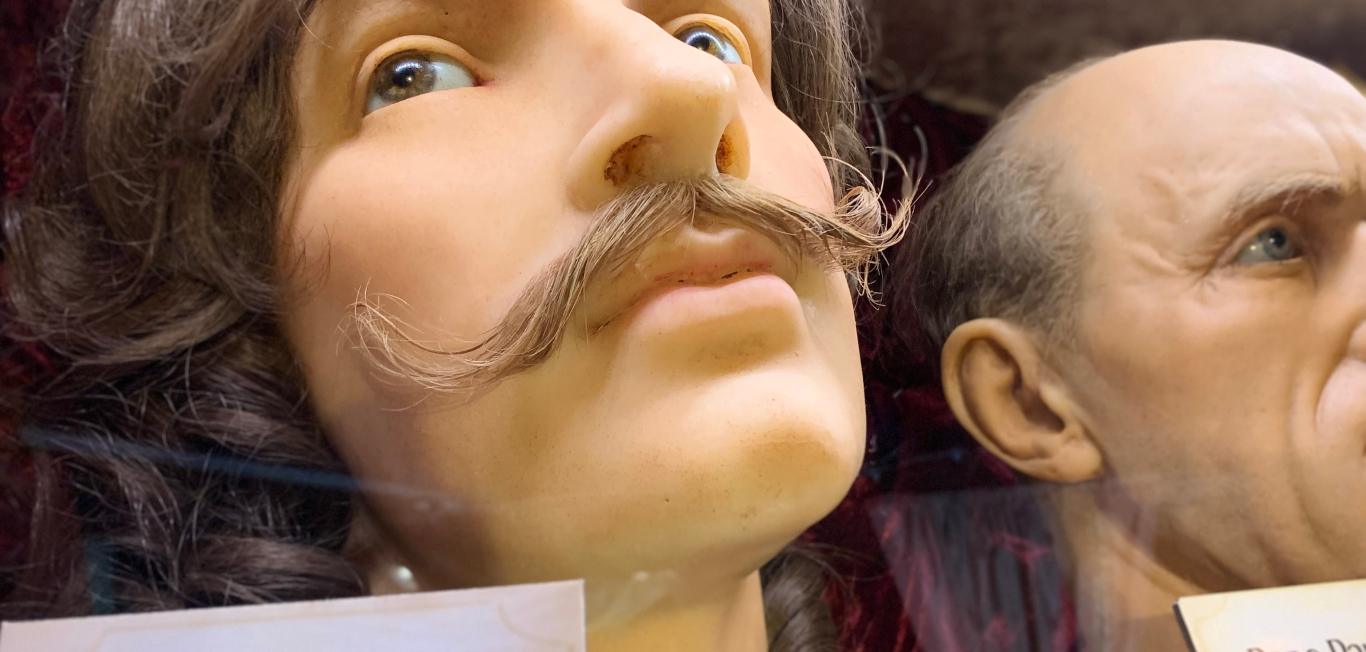
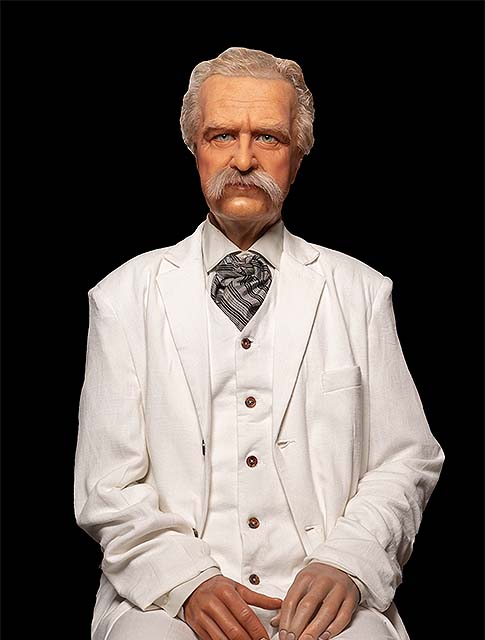
Visitors to the St. Augustine Museum, Potter’s Wax Museum, can encounter a lifelike representation of Twain, outfitted with his trademark white suit. His image endures not just as an author but as a storyteller who understood humanity.
DID YOU KNOW?
Mark Twain was born Samuel Langhorne Clemens in 1835.
Mark Twain is not only one of America’s greatest writers — he’s a man who experienced triumph and tragedy, wealth and ruin, all while finding meaning through the art of words. His journey through success and sorrow reveals the human side of a legend and reminds us why Mark Twain’s books remain timeless masterpieces.
Early Life of Mark Twain
Mark Twain’s story began in the small town of Florida, Missouri, where Samuel Langhorne Clemens was born on November 30, 1835. He was the sixth of seven children in a modest family. When he was four years old, his family moved to Hannibal, a Mississippi River port town that would later inspire the fictional setting of St. Petersburg in The Adventures of Tom Sawyer and Adventures of Huckleberry Finn.
As a child, young Samuel experienced hardship. His father, John Marshall Clemens, was a stern man, while his mother, Jane Clemens, possessed a warm humor that helped shape her son’s outlook. When Samuel was 11, his father died, and so, he left school to work as a printer’s apprentice. The printing shop became his first exposure to the publications and print, planting the seeds for his future as the great Mark Twain, author.
In his youth, Clemens worked as a typesetter and contributed sketches and articles to his brother Orion’s newspaper. His curiosity about the world led him to the river, where he became a licensed steamboat pilot at age 24. The river would leave a lasting imprint on his imagination. It was during these years that he adopted the name Mark Twain, a riverboat term meaning “two fathoms deep,” or safe water for navigation!
When the Civil War broke out, Clemens briefly joined a Confederate militia before moving west to Nevada and California, where he tried his hand at mining and, inevitably, journalism. His humorous travel letters caught the public’s attention. This would mark the beginning of Mark Twain’s legacy that would change American literature forever.
At Potter’s Wax Museum, visitors can view Twain’s likeness beside other cultural icons, symbolizing the power of storytelling in shaping the American identity. The figure captures the twinkle in his eye that made audiences across the world fall in love with his humor, wisdom, and storytelling skills.
DID YOU KNOW?
When the Civil War broke out, Clemens briefly joined a Confederate militia.
Interesting Facts About Mark Twain
Exploring Mark Twain facts offers glimpses into the eccentric, brilliant, and deeply human personality behind the pen name.
Mark Twain was born shortly after Halley’s Comet appeared in 1835 and famously predicted he would “go out with it,” which he did when it returned in 1910.
Before becoming a celebrated author, he worked as a printer, river pilot, prospector, and journalist.
His real name, Samuel Clemens, was replaced by his pen name, Mark Twain, which was taken from riverboat slang for a depth of 12 feet.
Twain was an early advocate for women’s rights and racial equality. These themes resonate throughout Mark Twain’s books, such as Huckleberry Finn.
He was friends with notable figures like Nikola Tesla and Helen Keller. Twain corresponded with presidents and inventors alike.
He was also one of the first authors to use a typewriter and to copyright his books internationally.
At the St. Augustine Museum, Twain’s story is featured in exhibits celebrating influential American authors whose words shaped culture and conscience.
Major Milestones and Accomplishments by Mark Twain
Mark Twain is defined by extraordinary accomplishments that shaped modern literature and popular culture. His humor, moral insight, and realistic portrayal of life on the Mississippi made him a literary pioneer whose influence continues to this day.
The Rise of Mark Twain Author
In 1865, Twain’s short story The Celebrated Jumping Frog of Calaveras County brought him national fame. His sharp wit and regional voice made readers laugh while revealing the quirks of American life. This success led to his first major work, The Innocents Abroad (1869), a travel narrative that humorously chronicled his journey through Europe and the Holy Land.
Twain’s breakthrough came with The Adventures of Tom Sawyer (1876) and Adventures of Huckleberry Finn (1884). These Mark Twain Books captured the innocence and rebellion of youth while confronting serious social issues like racism and moral hypocrisy. Many scholars consider Huckleberry Finn the first truly American novel—a cornerstone of Mark Twain’s history.
Twain’s career extended beyond fiction. He was a celebrated lecturer, captivating audiences across the world with his storytelling. His humor transcended borders, earning him fans from Boston to Bombay.
At the Potter’s Wax Museum, visitors can view Mark Twain, the author, displayed as he often appeared on stage — holding a cigar and smiling mischievously, as if about to deliver one of his timeless jokes.
Business Ventures and Financial Turmoil
While his pen brought fame, Twain’s business ventures often led to financial disaster. He invested in failed inventions and publishing schemes, leaving him bankrupt by 1894. Yet, in one of the most inspiring chapters of Mark Twain’s biography, he embarked on a worldwide lecture tour to repay his debts. His determination restored both his finances and his reputation.
DID YOU KNOW?
While his pen brought fame, Twain’s business ventures often led to financial disaster.
Twain’s humor remained sharp even in hardship. In essays like The Lowest Animal and The War Prayer, he used satire to critique war, greed, and human folly. Through laughter, he urged readers to reflect on the deeper truths of existence—a hallmark of Mark Twain’s books and his enduring moral legacy.
Late in Life
In his later years, Mark Twain became an international icon. He lived in Hartford, Connecticut, where his home — now the Mark Twain House & Museum — served as the creative hub for his most famous works. The residence stands today as a tribute to Mark Twain’s history, preserving the very rooms where his imagination flourished.
Though success surrounded him, Twain faced personal loss. His beloved wife, Olivia, and three of his four children died before him. These tragedies deepened his philosophical outlook, leading him to explore themes of mortality and the human condition. Works like Letters from the Earth reveal a man both skeptical and spiritual — a thinker wrestling with life’s great questions.
In his final decade, Twain’s trademark white suit and shock of hair became symbols of his public persona. He remained a beloved figure, lecturing and writing until his death on April 21, 1910 — the day after Halley’s Comet’s return, just as he had predicted.
Today, visitors of St. Augustine’s Museum, Potter’s Wax Museum, encounter Mark Twain, Author, not only as a literary figure but as an enduring emblem of humor, resilience, and humanity. His legacy continues to inspire new generations to question, laugh, and dream.
FAQs
When did Mark Twain die?
Mark Twain died on April 21, 1910, at the age of 74. His death came one day after Halley’s Comet’s return, fulfilling his own prophecy that he would “go out with it.” His passing marked the end of an era in Mark Twain’s history and the beginning of his eternal literary legacy.
What is Mark Twain most known for?
Mark Twain is most known for his novels The Adventures of Tom Sawyer and The Adventures of Huckleberry Finn. These Mark Twain Books defined American literature, capturing humor, social criticism, and the voice of a changing nation. His storytelling made him a central figure in the Mark Twain Biography.
Where did Mark Twain grow up?
Twain grew up in Hannibal, Missouri, a small river town that inspired much of his fiction. The Mississippi River shaped his imagination, becoming a symbol of freedom and adventure throughout Mark Twain’s history and his greatest works.
Why is Mark Twain important?
Mark Twain revolutionized American literature with his use of dialect, humor, and social commentary. Through Mark Twain Books, he gave voice to ordinary people and challenged readers to confront moral and social issues. His wit and honesty remain vital parts of Mark Twain Facts today.
How did Mark Twain get his name?
Twain adopted his pen name from a riverboat term meaning “two fathoms deep” or “safe water.” The name reflects his years as a steamboat pilot and symbolizes the depth of his experiences — a fitting origin in the story of Mark Twain.