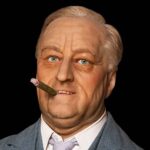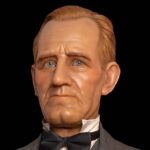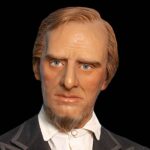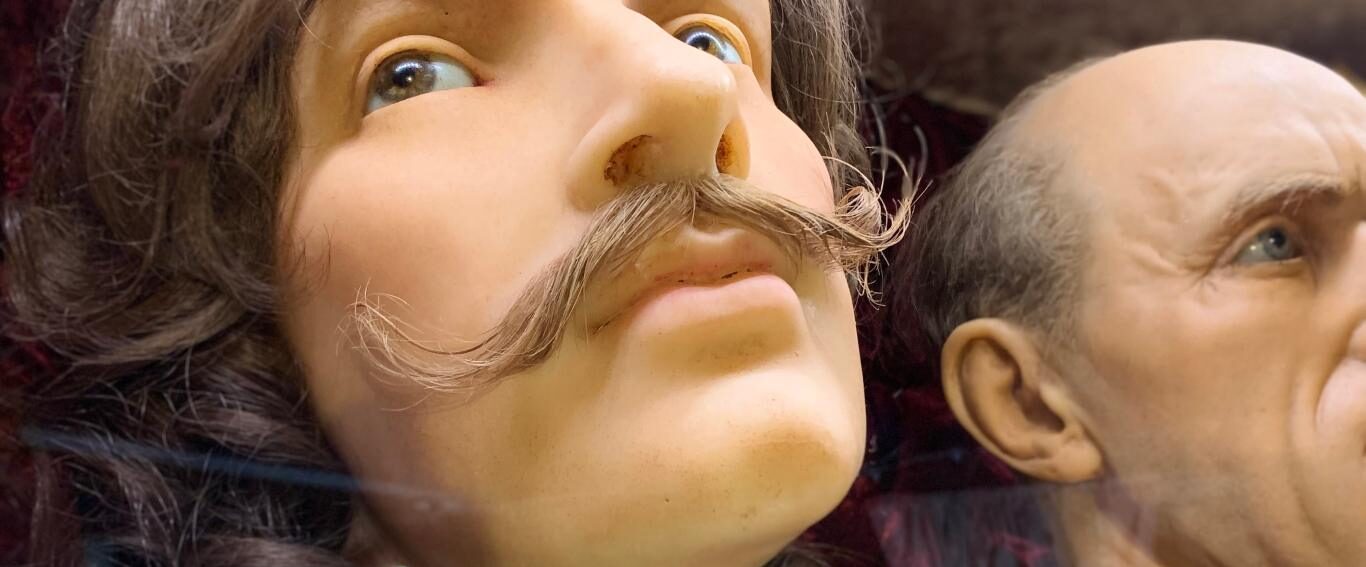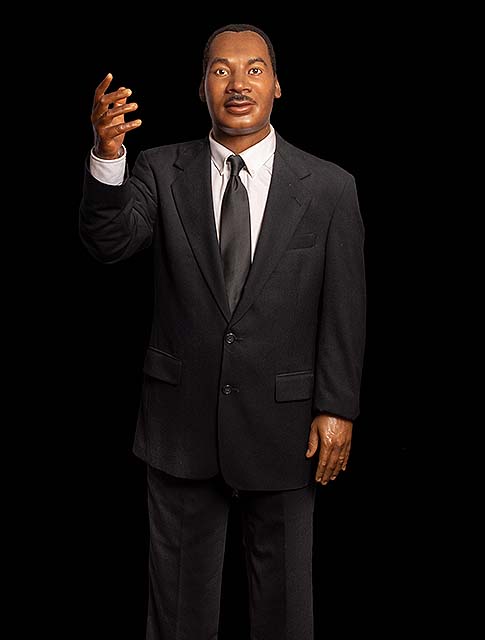
Exploring the life of Dr. Martin Luther King Jr. at Potter’s Wax Museum offers visitors an engaging look at one of the most visionary leaders in American civil rights history. Located in historic downtown St. Augustine, America’s oldest wax museum features an authentically detailed figure of Dr. King alongside curated historical exhibits. Visiting Potter’s Wax Museum allows guests to stand face-to-face with the iconic minister and activist while learning how his commitment to nonviolent resistance, equality, and justice transformed the nation.
Why Choose Potter’s Wax Museum?
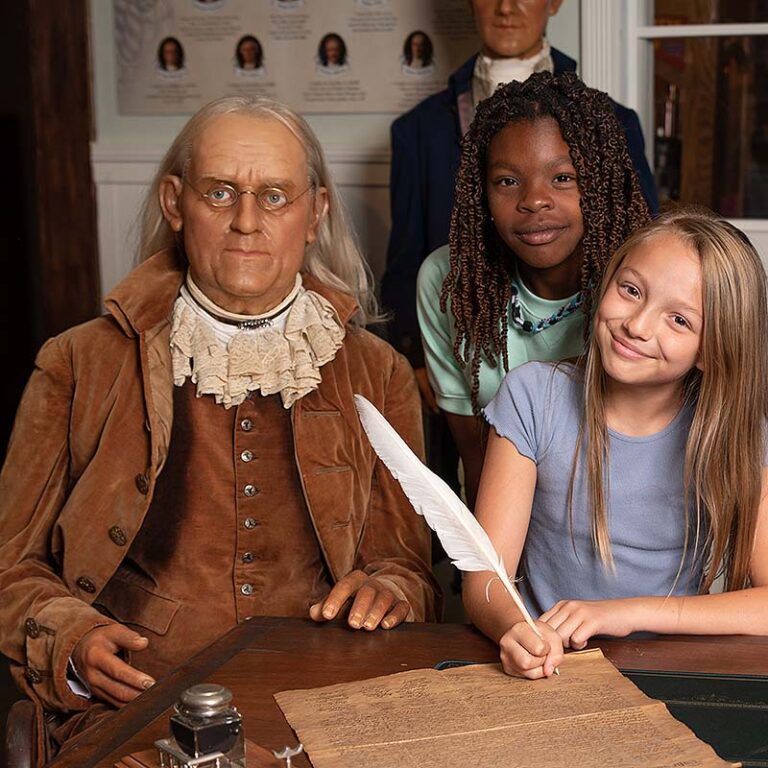
- Lifelike Craftsmanship: Stand inches away from meticulously detailed, life-sized wax figures created with real human hair and custom-sculpted features.
- Rich Cultural History: Discover the stories behind world leaders, historical figures, famous athletes, and legendary pop culture icons.
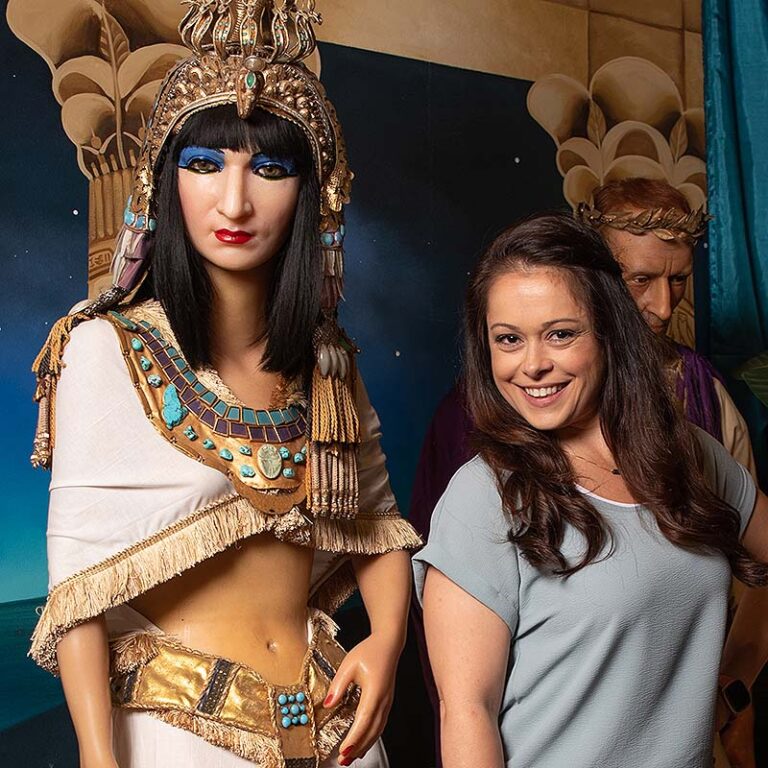
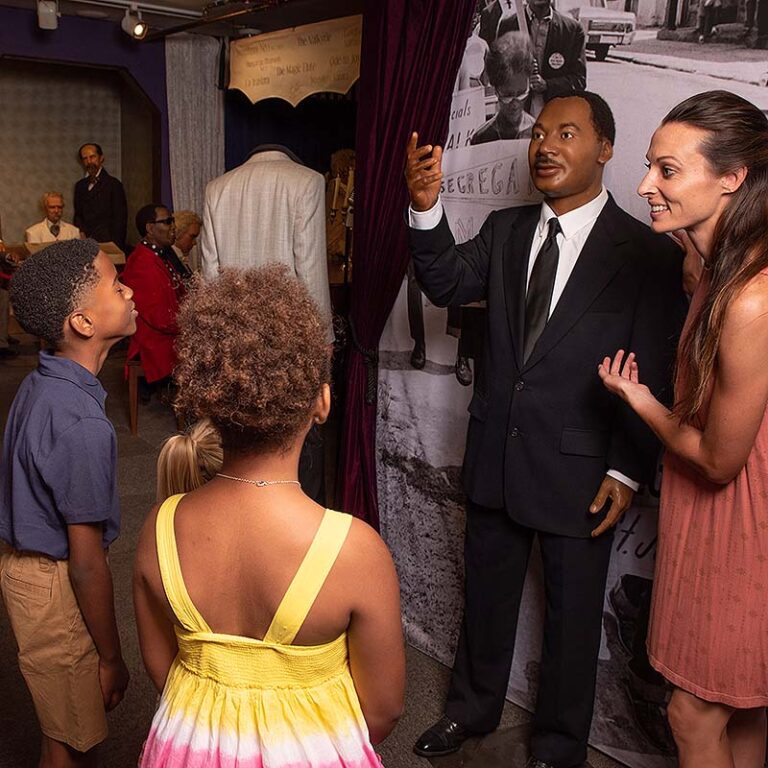
- Interactive Photo Opportunities: Capture memorable photos with civil rights pioneers, world leaders, and historical figures inside historic museum galleries.
- Family-Friendly Environment: Enjoy an entertaining, self-paced indoor experience suitable for visitors of all ages in the heart of the city.
Points of Interest & Dr. Martin Luther King Jr. Legacy
- Early Life & Academic Success: Born in Atlanta, Georgia in 1929, King excelled academically, skipping two grades to enroll at Morehouse College at just 15 years old.
- Philosophy of Nonviolence: Inspired by his Christian faith and the peaceful teachings of Mahatma Gandhi, King pioneered nonviolent resistance during the 1955 Montgomery Bus Boycott.
- SCLC & March on Washington: Co-founded the Southern Christian Leadership Conference in 1957 and delivered his famous “I Have a Dream” speech during the 1963 March on Washington.
- Landmark Civil Rights Legislation: Played a pivotal role in driving national support for the passage of the Civil Rights Act of 1964 and the Voting Rights Act of 1965.
- Nobel Peace Prize: Recognized internationally in 1964 as the youngest recipient of the Nobel Peace Prize for his commitment to peaceful social reform.
- Expanded Activism & Global Impact: Broadened his advocacy to fight economic inequality through the Poor People’s Campaign while advocating for peace and human rights worldwide.
Dr. Martin Luther King Jr. remains one of the most influential figures in American history. A minister, activist, and visionary leader, he became the nation’s most prominent voice in the 20th-century struggle for civil rights. Any comprehensive biography of Dr. Martin Luther King Jr. highlights his commitment to equality, justice, and peaceful social change.
King was born on January 15, 1929, in Atlanta, Georgia. He grew up during a time of racial segregation in the United States. From an early age, he witnessed discrimination, which shaped his future.
What set Dr. Martin Luther King Jr. apart was his dedication to nonviolent resistance. Influenced by his Christian faith and the teachings of Mahatma Gandhi, he believed lasting change could be achieved through peaceful action rather than violence. His leadership helped transform the civil rights movement into a powerful force that changed the nation.
King was assassinated on April 4, 1968, in Memphis, Tennessee. However, his impact did not end with his death. His words and advocacy continue to inspire people across generations.
Today, schools, streets, monuments, and an annual federal holiday honor his legacy. More importantly, his vision of a society where people are judged by their character rather than the color of their skin continues to inspire individuals and communities striving for justice and equality. More than five decades after his passing, Dr. Martin Luther King Jr. remains a symbol of hope, courage, and positive change.
Nonviolent Resistance
Influenced by his Christian faith and the teachings of Mahatma Gandhi, he believed lasting change could be achieved through peaceful action rather than violence.
Early Life of Martin Luther King Jr.
The story of Dr. Martin Luther King Jr.’s early life reveals a young man whose intelligence, determination, and faith helped prepare him for extraordinary leadership. According to many accounts in a Dr. Martin Luther King Jr. biography, King displayed exceptional academic ability from an early age.
Growing up in Atlanta, Georgia, he attended segregated schools but excelled in the classroom. His academic success allowed him to skip both the ninth and twelfth grades. At just 15 years old, he enrolled at Morehouse College, one of the nation’s most respected historically Black colleges and universities. There, he began exploring questions about society, justice, and service to others. He graduated at age 19 with a Bachelor of Arts degree in Sociology.
King continued his education at Crozer Theological Seminary in Pennsylvania. In 1951, he graduated as valedictorian of his class.
King later enrolled in Boston University to pursue a doctorate in systematic theology. While studying there, he met Coretta Scott, a talented musician and student who shared his commitment to social justice. Their relationship grew quickly, and they married in 1953, beginning a lifelong partnership rooted in faith, love, and activism.
After completing his studies, King accepted a position as pastor of Dexter Avenue Baptist Church in Montgomery, Alabama, in 1954. Although he was only in his mid-twenties, he quickly became respected within the community. This role would place him at the center of the Montgomery Bus Boycott just one year later and launch him into national prominence.
The educational achievements, spiritual foundation, and personal relationships formed during these early years shaped King into the leader who would help transform American society.
Save up
to 5%
Potter’s Wax Museum Tickets
to 5%
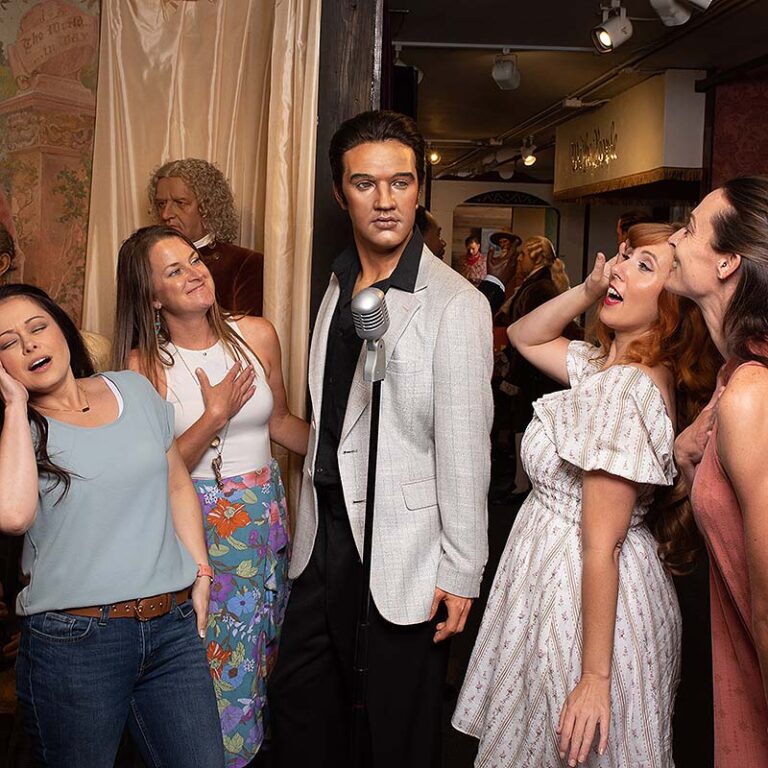
Potter’s Wax Museum is a fun, family-friendly attraction that offers a surreal experience with famous Hollywood stars, professional athletes, and political figures.
- Potter’s Wax Museum is home to more than 160 different wax figures
- The museum’s collection includes people who’ve played an important part in history
- Potter’s Wax Museum offers an entertaining time for adults and children of all ages


Save up
to 6%
to 6%
Gain New Insight into Florida’s Past
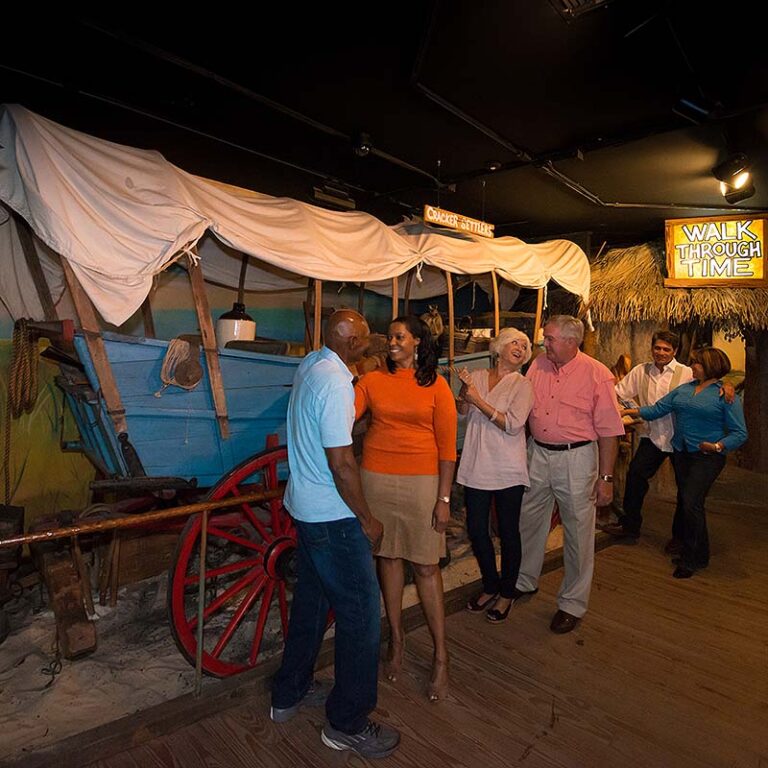
A combination of historical displays and private collections bring over 400 years of Florida history to life. The St. Augustine History Museum features displays of the various countries that ruled over St. Augustine: England, Spain, and France.
- Visit our Spanish sunken treasure room
- Explore how St. Augustine and Florida grew under the Spanish
- Hear fascinating stories about the Indians, the Spanish Galleons and the Pirates of the Revolutionary War
- More than 400 years of history on display



Save up
to 15%
Ghosts & Gravestones Tour
to 15%
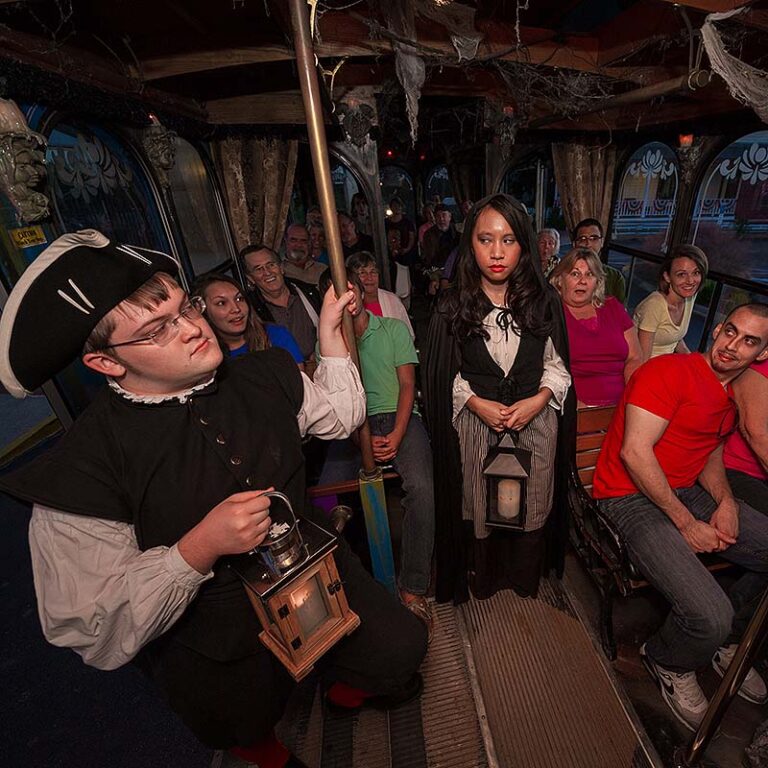
Prepare yourself for a Frightseeing Adventure like none other as your resident Ghost Host shares tales both true and truly unnerving of the city’s tumultuous past. Discover the secrets of the Tolomato Cemetery and the apparition seen playing on the sacred grounds after dark. Could it be the spirit of five-year-old James or is it the Ghost Bride, still waiting for her walk down the aisle. Be sure to keep a watchful eye while passing by the old City Gates. You might catch a glimpse of Elizabeth, a child victim of the yellow fever, waving to passersby.
- 60-minute narrated tour by our talented ghost hosts
- Stories come from years of research, personal accounts and hauntingly real-life experiences
- Exclusive nighttime experience inside of Potter’s Wax Museum’s Chamber of Horrors
- As Seen on The Today Show, Sci-Fi Channel and Travel Channel
- 100% Satisfaction Guarantee
Prev
Next
Personal Life
Dr. Martin Luther King Jr. was a devoted husband, father, and man of faith. A complete Dr. Martin Luther King Jr. biography reveals a personal life marked by love, sacrifice, and perseverance.
In 1953, King married Coretta Scott King, who would become one of his strongest supporters and an influential leader in her own right. Together they built a family while navigating the challenges that came with King’s growing role in the civil rights movement.
The couple had four children named Yolanda Denise King, Martin Luther King III, Dexter Scott King, and Bernice Albertine King. King made efforts to remain involved in his children’s lives and maintain close family relationships through many challenges.
His Christian faith played a central role in everything he did. As a Baptist minister, King believed deeply in the principles of love, forgiveness, and service. He was also inspired by Mahatma Gandhi’s philosophy of nonviolent resistance, which became a cornerstone of his activism.
Life was not easy for the King family. They faced constant threats and harassment because of King’s involvement. Their home was bombed, but the family remained resilient.
Interesting Facts About Dr. Martin Luther King Jr.
Many people know the broad details of King’s achievements, but there are numerous fascinating facts about Dr. Martin Luther King Jr. that provide additional insight into his remarkable life. These details help paint a fuller picture of the man behind the movement and enrich any Dr. Martin Luther King Jr. biography.
One surprising fact is that King was not born with the name Martin Luther King Jr. His birth name was Michael King Jr. His father later changed both of their names to honor Martin Luther, the German Protestant reformer who played a significant role in Christian history.
King was also arrested 29 times throughout his life. Many of these arrests stemmed from peaceful demonstrations and acts of civil disobedience designed to challenge unjust laws.
King also survived an assassination attempt nearly a decade before his death. In 1958, while signing books in Harlem, he was stabbed by Izola Ware Curry. Doctors later said he came extremely close to losing his life.
In 1964, King became the youngest recipient of the Nobel Peace Prize. He donated the entire prize money to support civil rights organizations and initiatives.
King was also a talented writer and author. His books, including Stride Toward Freedom and Why We Can’t Wait, offered detailed accounts of the civil rights struggle and his philosophy of nonviolent change.
King’s influence extended far beyond his lifetime. His speeches continue to be studied around the world, and his leadership remains a model for advocates of social justice.
What Dr. Martin Luther King Jr. Is Most Known For
Dr. Martin Luther King Jr. is best known for his leadership during the American civil rights movement. He helped challenge racial segregation and discrimination throughout the United States.
Perhaps his most famous moment came on August 28, 1963, during the March on Washington for Jobs and Freedom. Standing before a crowd of more than 250,000 people at the Lincoln Memorial, King delivered his historic “I Have a Dream” speech. It was one of the most celebrated speeches in American history. It remains a powerful call for equality and justice.
King was also widely recognized for promoting nonviolent resistance. Rather than responding to injustice with violence, he encouraged peaceful demonstrations, boycotts, marches, and civil disobedience. His approach helped gain public support for the civil rights movement and inspired similar movements around the world.
His efforts contributed to the Civil Rights Act of 1964 and the Voting Rights Act of 1965. Today, King’s influence reaches far beyond the United States. His message of equality, dignity, and peaceful change continues to inspire social justice movements across the globe.
March on Washington for Jobs and Freedom
Standing before a crowd of more than 250,000 people at the Lincoln Memorial, King delivered his historic "I Have a Dream" speech. It was one of the most celebrated speeches in American history. It remains a powerful call for equality and justice.
Dr. Martin Luther King Jr. Civil Rights Leadership
The story of Dr. Martin Luther King Jr. civil rights leadership is one of courage, determination, and historic achievement. Among the many Dr. Martin Luther King Jr. achievements, his role in transforming the civil rights movement stands above all others.
King first gained attention during the Montgomery Bus Boycott in 1955. After Rosa Parks’ arrest, African Americans organized a boycott of Montgomery’s segregated bus system. The boycott lasted more than a year and ultimately resulted in the desegregation of public buses.
In 1957, he helped establish the Southern Christian Leadership Conference (SCLC). The organization was a major force in coordinating civil rights campaigns throughout the South.
One of King’s most important campaigns took place in Birmingham, Alabama, in 1963. Demonstrations against segregation drew national attention. During this campaign, King wrote the influential “Letter from a Birmingham Jail.” This defended the moral necessity of direct action against injustice.
He then played a leading role in the March on Washington. He delivered the iconic “I Have a Dream” speech. His influence helped bring civil rights issues to the forefront of national discussion.
In 1964, King received the Nobel Peace Prize in recognition of his commitment to nonviolent social change. The following year, he helped lead the Selma to Montgomery marches, which highlighted voter suppression and contributed directly to the passage of the Voting Rights Act of 1965.
These accomplishments demonstrate why King’s leadership remains one of the most significant examples of peaceful activism in modern history.
Post-Civil Rights Era of Dr. Martin Luther King Jr.
In the final years of his life, King expanded his mission beyond racial equality. As detailed in any thorough Dr. Martin Luther King Jr. biography, he increasingly focused on economic justice, poverty, and international peace.
King launched the Poor People’s Campaign. The initiative drew attention to poverty affecting Americans of all races. It advocated for policies that would improve living conditions for disadvantaged communities.
King also became a vocal critic of the Vietnam War. He argued that resources spent on war could address poverty and inequality. His stance generated controversy. But overall, this reflected his commitment to nonviolence and human rights.
On April 4, 1968, while supporting striking sanitation workers in Memphis, Tennessee, King was assassinated. His death shocked the nation and sparked widespread grief, protests, and unrest across many cities.
King passed away at 39; however, his vision of justice continues to inspire people around the world.
FAQs
What were Dr. Martin Luther King Jr.’s major achievements during his leadership in the civil rights movement?
His major achievements include leading the Montgomery Bus Boycott, co-founding the SCLC, helping organize the March on Washington, supporting the passage of the Civil Rights Act of 1964 and the Voting Rights Act of 1965, and receiving the Nobel Peace Prize.
How did Dr. Martin Luther King Jr. impact American society?
King helped dismantle legal segregation, expanded voting rights, promoted nonviolent activism, and inspired social reforms that continue to influence American society today.
What are some controversies associated with Dr. Martin Luther King Jr.?
Like many public figures, King faced criticism from political opponents during his lifetime. His opposition to the Vietnam War and his advocacy for economic reform were particularly controversial at the time.
What is unique about Dr. Martin Luther King Jr.’s personal life?
King balanced his responsibilities as a husband, father, minister, and civil rights leader while enduring significant threats and public pressure.
How is Dr. Martin Luther King Jr. remembered today?
He is remembered through a national holiday, memorials, educational programs, and continued recognition of his contributions to civil rights and social justice.
What were Dr. Martin Luther King Jr.’s contributions to economic justice and international peace?
King’s Poor People’s Campaign and opposition to the Vietnam War reflected his belief that justice should extend beyond civil rights.